
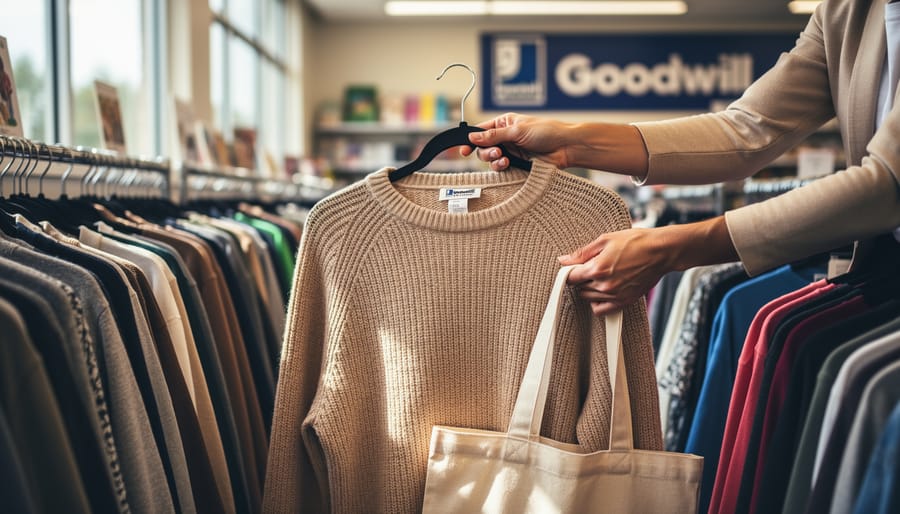
The best Goodwill hauls come down to three habits: knowing your store’s rhythm, inspecting every piece before it hits the cart, and shopping with a loose wish list instead of a rigid one. Do those well and a $30 trip can turn into a wardrobe refresh, a few home projects, and zero wasted gas.
Goodwill is a treasure hunt, and treasure hunts reward the prepared. Stores restock on their own schedules, color tags and weekly sales can cut your total in half, and the best finds often hide outside the racks you’d normally head for. A quick check of seams, zippers, and fabric tags takes about a minute per piece and saves you from the dreaded “why did I buy this?” moment at home.
The nine tips below cover all of it, from timing your visits to upcycling your finds with simple DIY tweaks. They’re beginner-friendly, budget-first, and built around what actually works on the sales floor, whether you’re chasing the latest thrifted trends or just hoping to find a great sweater for cheap.
Grab a tote bag, bring some patience, and let’s make your next trip count.
How These Goodwill Thrifting Tips Were Chosen
I didn’t want this to be a random pile of advice, so I filtered every tip through a few simple questions. Each one comes from real, hands-on thrifting trips, the kind where you learn by walking the aisles and sometimes getting it wrong.
Here’s what a tip had to do to make the list:
- Budget-friendly: it helps you keep more money in your pocket.
- Easy to try: even a first-time thrifter can use it right away.
- Sustainable: it keeps good clothes in circulation and out of the landfill.
- Works in any store size: it’s useful at a tiny shop or a sprawling superstore.
- Flexible for any personal style: it supports your look, whatever that is.
One friendly reminder: every Goodwill runs a little differently. Pricing, sales, and store policies vary by location, so treat these tips as a starting point and check with your local store for the specifics.
1. Go in With a Loose Wish List, Not a Rigid Shopping List
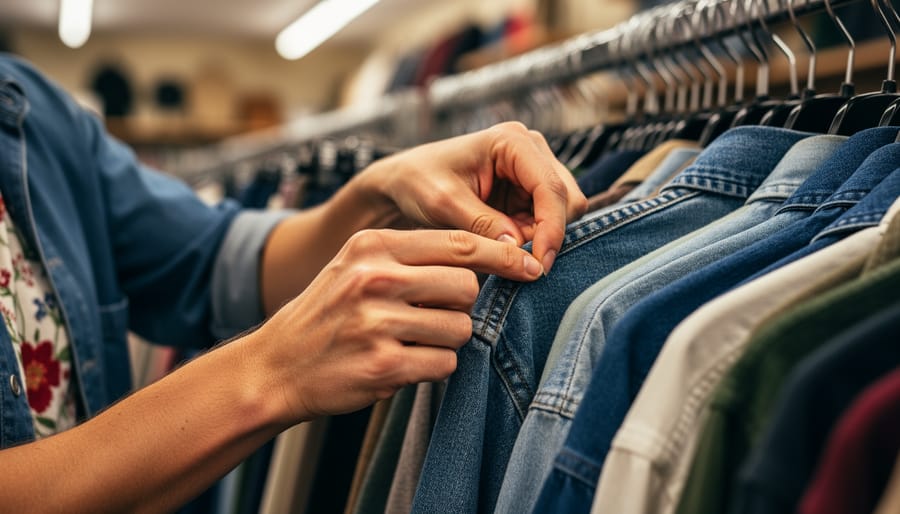
Before I head to Goodwill, I jot down three or four wardrobe gaps in my phone notes. Maybe it’s a denim jacket, a cozy cardigan, or a pair of sturdy boots. That tiny list keeps me focused, so I don’t wander out with an armload of “maybe” pieces that don’t fit my closet.
But here’s the key: hold that list loosely. Thrift stores don’t restock by request, and the best finds usually show up when you least expect them.
Last fall, I went in hunting for a gray crewneck sweater. I never found one. What I did find was a rust-colored wool coat tucked between a rack of blazers, sitting there like it had been waiting for me. It had been on my “someday” dream list for ages, though never on my actual shopping list. I wore it all winter and got compliments every single week.
So bring your wish list as a gentle compass, not a rulebook. Check it, then give yourself permission to follow your curiosity. Some of your favorite pieces will be ones you never planned on.
2. Learn Your Local Goodwill’s Rhythm: Restock Days and Best Times to Visit
Every Goodwill has its own heartbeat, and learning yours is one of the easiest ways to up your thrifting game. Donations arrive all week long, but when they get sorted, priced, and rolled out to the floor depends on the store. Some locations restock throughout the day, while others have a busier push at certain times.
So skip the guessing and just ask! Next time you’re at the register or browsing near a staff member, try something simple like, “When do you usually put out new items?” Most folks are happy to share, and you’ll often pick up extra insider details, like which departments refresh most often. Because schedules differ from store to store, a friendly chat beats assuming any one rule.
Once you know your store’s flow, try planning a visit around it. Weekday mornings often feel calmer, with fewer carts, wider aisles, and more time to really look at each rack. That quiet pace makes it easier to spot hidden gems and to browse without feeling rushed. Keep notes on what you learn, and soon you’ll have your own personal thrifting calendar!
3. Follow the Color Tags and Weekly Sales
Here’s one of my favorite budget secrets: lots of Goodwill stores run a color-tag system. Each week, a certain tag color gets a markdown, so a shirt with the right tag might cost half of what the neighboring one does. Many stores also rotate through other sales, like a bargain on shoes one week and a deal on housewares the next. You can read more about how rotating color tag deals work, but the real details depend on your neighborhood store.
Spotting them is easy once you know where to look. Check the signs near the entrance, the end of the aisles, and the registers, since many stores post the current tag color and discount there. Then peek at the little tag on each item as you browse.
Programs differ from one location to the next, so a quick question at the register saves guessing. The payoff is worth it: a few minutes of tag-watching can stretch your thrifting budget into a few extra finds.
4. Shop by Fabric and Feel, Not Just by Size or Brand
Here’s a habit that changed my thrifting game: I stopped reading tags first and started touching things. Slide your hand down a rack and let your fingers do the scouting. Good fabric announces itself. Wool feels warm and a little springy, cotton is soft and sturdy, linen has that cool, slightly crisp texture, and silk feels smooth and almost liquid. Denim worth taking home has some weight to it, like it could survive a few more decades.
Once something feels promising, flip to the tag and check the fiber content. Natural fabrics tend to wear well, wash well, and hold their shape long after trendier pieces have faded.
Now about sizing. Older and vintage garments often run smaller or cut differently than today’s sizes, so a tag reading 14 might fit like a modern 8. Don’t let the number scare you off. Hold the piece up against your body, check the shoulders and length, and when you can, try it on. Some of my favorite finds had sizes that made no sense at all.
Brand names are fun, but fabric and fit are what you’ll actually wear and love.
5. Check Every Piece Like a Pro: A Quick Inspection Routine
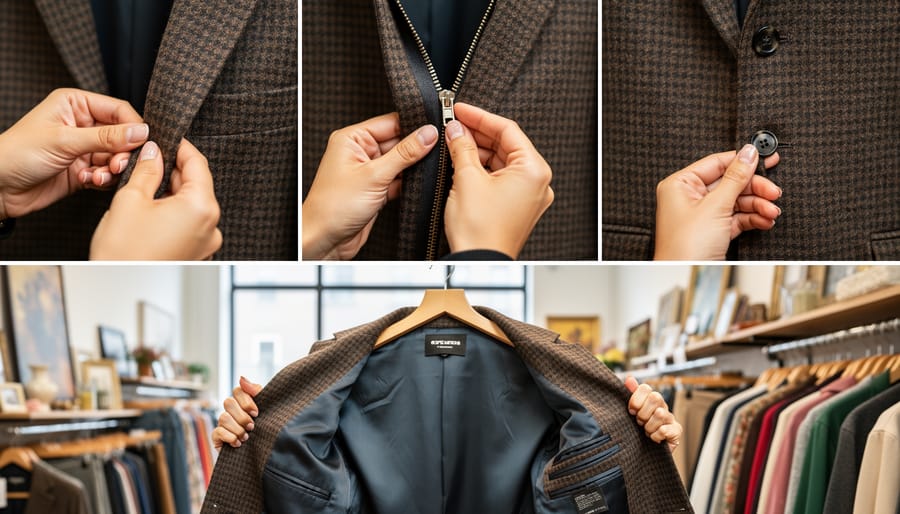
Before anything goes in your cart, give it a quick once-over. It takes about a minute, and it’s the best habit I picked up from years of thrifting.
Start with the seams. Gently tug at the shoulders and sides to make sure the stitching holds. Next, run every zipper up and down and check that each button is there and secure. Lift the arms and look at the underarms, since that’s where stains and fading love to hide. Then flip up the hem to check for fraying or drooping.
Now use your senses. Rub the fabric between your fingers to spot heavy pilling, and give the piece a quick sniff. Musty smells often wash out, but a strong chemical or smoky odor can be stubborn, so use your judgment.
Here’s the good news: most flaws are friendlier than they look. A missing button, a loose hem, or a tiny snag can be fixed with a needle and thread and about ten minutes of your evening. That’s the DIY spirit of thrifting at work. Pieces with solid fabric and small fixable issues are often the ones that anchor great ensemble fashion on a budget. Large stains or ripped fabric, though? Feel free to pass and keep hunting.
6. Hunt Beyond the Women’s and Men’s Racks
Some of my favorite pieces have come from racks I almost walked past. Men’s flannels and button-downs are perfect for that relaxed, oversized look, and they’re ideal for layering over tees or under chunky knits. Wander through the kids’ section too, since small scarves, caps, and sunglasses sometimes fit adults just fine. Then slow down at the accessories wall. Belts, scarves, jewelry, and bags can pull a whole outfit together for a few dollars, and they never have to fit.
Don’t skip the housewares aisle either. Silky scarves, printed pillowcases, and cotton tablecloths in vintage-inspired patterns can be tied, sewn, or turned into something wearable. That’s a nod to the layered, retro-leaning style so many secondhand shoppers love right now. If you’re curious about digging through bigger bins of mixed goods, our Goodwill Outlet guide shows how to shop that treasure-hunt style with confidence.
Everyone deserves to shop the whole store, so wear what makes you smile, whichever section it came from.
7. Try It On and Think Outfits, Not Just Items
Fitting rooms are your best friend at Goodwill. Sizing at secondhand stores is a wild ride, since a medium from 1998 and a medium from last year can fit like two different people. If the store has a fitting room, use it. If it doesn’t, try pieces on over what you’re wearing, or hold them up against yourself and check the shoulders and length.
Here’s a trick I swear by: before a piece goes in the cart, imagine three outfits you could make with it using things already hanging in your closet. A vintage cardigan with your favorite jeans? Check. Over a slip dress? Yes. Layered with a button-down for fall? Definitely. If you can only picture one outfit, or none, set it back down and let someone else fall in love with it.
Snap a quick photo in the mirror, too. Looking at a picture later helps you see the fit with fresh eyes, and it makes a great reference when you’re deciding between two maybes.
This keeps your budget happy, because pieces that mix with what you own earn their spot, while one-off impulse buys often end up in the donation pile.
8. Pick Up Projects: Upcycle Goodwill Finds With Simple DIY Tweaks
Some of my favorite Goodwill finds weren’t perfect when I grabbed them. I once rescued a boxy wool blazer with sad, mismatched buttons for a few dollars. A set of vintage brass buttons later, it looked like it came from a boutique. That’s the magic of a little DIY: a tiny tweak can turn “meh” into “mine.”
You don’t need a sewing studio or fancy tools. Start with these five easy ideas:
- Swap buttons: snip off the old ones and stitch on new ones using a needle and thread.
- Hem pants or skirts: fold, pin, and sew or use hem tape and an iron.
- Crop a sweatshirt: mark your length, then cut with fabric scissors (cotton fleece won’t fray).
- Dye a faded tee: a box of fabric dye and a bucket of hot water bring back the color.
- Add patches: iron-on or sew-on patches hide small flaws and add personality.
Before you commit, try the piece on and pin where you want the change. Measure twice, cut once, and test dye on a scrap or hidden seam first. If a mistake happens, it’s usually fixable, and it only cost a few dollars anyway.
Once you catch the upcycling bug, browse our crafts and DIY ideas for more weekend projects that turn secondhand finds into wardrobe favorites.
9. Wash, Refresh, and Keep Your Thrifted Pieces Looking Great

Here’s the part that makes a thrift haul feel truly yours: a little aftercare. Wash new-to-you clothes as soon as you get home, using the care label as your guide. Cold water and a gentle cycle are kind to older fabrics, and they keep colors from fading.
For stains, start small. A dab of mild dish soap worked in with your fingertips, plus a bit of patience, lifts many marks without harsh chemicals. If something smells a little musty, hang it outside or near an open window for a few hours. A quick steam also freshens wool, silk, and lined pieces that don’t love the washer.
Once everything is clean, store it well. Use sturdy hangers for jackets and dresses, and fold knits so they don’t stretch out.
A little love after the checkout line means your favorite finds stay great for years.
Goodwill Thrifting FAQs
Are Goodwill prices negotiable?
Prices are usually set by the store, so haggling isn’t the norm. Policies differ from one location to the next, so it’s worth asking your local Goodwill what they allow.
How can I tell quality from fast fashion?
Trust your hands and eyes. Natural fabrics like wool, cotton, and denim, sturdy seams, and tidy finishing are good signs, and the fabric-and-feel tip and the inspection routine above will steer you right.
Is it worth donating and shopping on the same trip?
It can be! Dropping off a bag of things you’ve outgrown makes room in your closet for new-to-you finds. Check with your local store about how their donation door works, since setups vary.
How often should I visit?
Whenever you can swing it. Inventory changes constantly, so a quick browse every week or two gives you more chances to catch something wonderful, especially once you’ve learned your store’s rhythm.
Still wondering about a specific policy, like returns or sale days? Your neighborhood Goodwill is the best source, and the friendly staff are usually happy to explain how things work.
Final Thoughts: Keep Thrifting and Keep Having Fun
Thrifting rewards the shopper who shows up with patience, curiosity, and a little creativity. Some trips you’ll walk out with a jacket that looks like it was made for you, and some days you’ll leave empty-handed but a bit wiser about what to hunt for next time. Both count as wins, because every visit sharpens your eye and builds a wardrobe that’s stylish, sustainable, and kind to your budget.
The real magic of Goodwill is that you never know what’s waiting on the next rack. Keep your wish list loose, give fabrics a good feel, imagine a few outfits before you head to the register, and don’t be afraid to rescue a piece that just needs a button or a hem. Those little habits turn a casual browse into a genuine treasure hunt.
We’d love to hear about your best finds, so tell us what you’ve scored lately and which of these tips worked for you. And when you’re ready for more inspiration, wander through the rest of Thrifty Home’s fashion and DIY articles for fresh ideas on thrifting smart and making secondhand finds feel brand new. Happy hunting!