Planning your Goodwill Outlet visit for tomorrow? Here’s the straight answer: outlet hours vary by location, and many stores operate on different schedules than regular Goodwill retail shops. The fastest way to confirm whether your local outlet is open tomorrow is to check the store’s Google Business listing or call directly, since outlets don’t follow a universal schedule and some have recently changed their Sunday hours.
If you’ve never been to a Goodwill Outlet before, you’re in for a completely different thrifting experience. These warehouse-style stores sell items by the pound instead of individually priced pieces, which means you can walk out with bags full of treasures for just a few dollars. The Milwaukee location keeps extended hours Monday through Saturday from 9 a.m. to 7 p.m., then closes earlier on Sundays at 5 p.m. Meanwhile, the Kent, Washington outlet runs Sunday through Saturday from 9 a.m. to 7 p.m. Some outlets open as early as 7 a.m. on weekdays, while others stick to 8 a.m. or 9 a.m. starts.
The catch? Starting May 31st, several outlets eliminated Sunday hours entirely, so what was open last month might be closed tomorrow if you’re planning a weekend trip. That’s why double-checking is essential, especially if you’re making a special journey. Once you confirm they’re open, get ready to dig through bins of unsorted donations, score designer pieces for pocket change, and join the community of savvy shoppers who’ve made outlet thrifting their Sunday ritual (or Tuesday morning routine, depending on your local schedule).
Why Shop at Goodwill Outlets (The Bins)
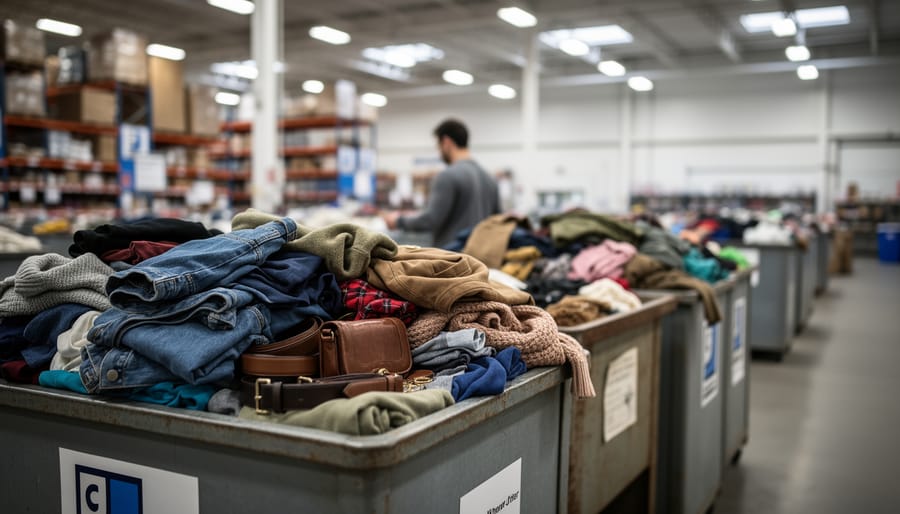
Walking into a Goodwill Outlet for the first time feels like stepping onto an archaeological dig where designer jeans cost three dollars and vintage Le Creuset hides under old sweaters. These warehouse-style stores, affectionately called “the bins” by regular shoppers, sell items by the pound rather than individually tagged prices. That means you’re paying roughly $1.50 to $2.00 per pound for clothing, making it possible to leave with an entire wardrobe for what you’d spend on one mall shirt.
The treasure hunt atmosphere hooks people immediately. Unlike regular Goodwill stores with neatly organized racks, outlets dump unsorted merchandise into rolling bins that get rotated throughout the day. Last month, I watched a woman unearth a pristine Kate Spade bag from beneath a tangle of curtains, literally squealing with delight. That unpredictability keeps people coming back, and you’ll notice familiar faces developing their own digging techniques and sharing tips across bins.
Beyond the adrenaline rush of the hunt, outlet shopping aligns perfectly with sustainable living. You’re giving clothes and household items their absolute last chance before landfills, extending the lifecycle of goods that might otherwise be discarded. Every pound you buy represents resources saved and waste diverted.
The community aspect surprises newcomers. Regular shoppers form loose friendships, warning each other about fresh bin rotations or helping spot the other half of a pair of boots. There’s an unspoken camaraderie among bin divers, a shared understanding that patience, dirty hands, and a willingness to dig lead to the best finds. You’re not just shopping, you’re joining a subculture of resourceful, eco-minded treasure hunters who know that incredible deals hide in the most unexpected places.
What Makes Outlet Shopping Different from Regular Goodwill Stores
Walking into a Goodwill Outlet feels nothing like browsing a regular Goodwill store. Instead of neatly organized racks and shelves, you’ll face rows of large rolling bins filled with unsorted merchandise. Everything is mixed together, clothes tangled with housewares, books buried under kitchen gadgets, which means you’ll be digging through layers to find your treasures. The pricing structure is completely different too: rather than individual price tags, you’ll pay by the pound (typically around $1.49 to $2.99 per pound for most items), making it possible to score ensemble fashion tips complete outfits or bundles of fabric for crochet patterns at shockingly low prices.
Here’s what sets outlets apart from traditional stores:
- Bins instead of shelves, merchandise is dumped into large rolling containers for self-serve treasure hunting
- Pay-by-pound pricing instead of per-item tags, dramatically lowering costs
- Fresh merchandise rotated throughout the day as bins are swapped out
- Zero organization, you’ll need to sort through everything yourself
- Faster-paced atmosphere with experienced shoppers moving quickly when new bins arrive
- Items often in as-is condition without quality control sorting
First-time visitors should expect a more physical, hands-on shopping experience. You’ll get dusty, you’ll need to inspect items carefully for damage, and you might feel overwhelmed by the sheer volume of unsorted goods. But once you adjust to the hunt, you’ll discover incredible deals on everything from clothing to craft supplies to thrift decor finds. The lack of curation is exactly what makes outlets so rewarding for dedicated thrifters.
Best Items to Find at Goodwill Outlets
1. Clothing and Fashion Finds
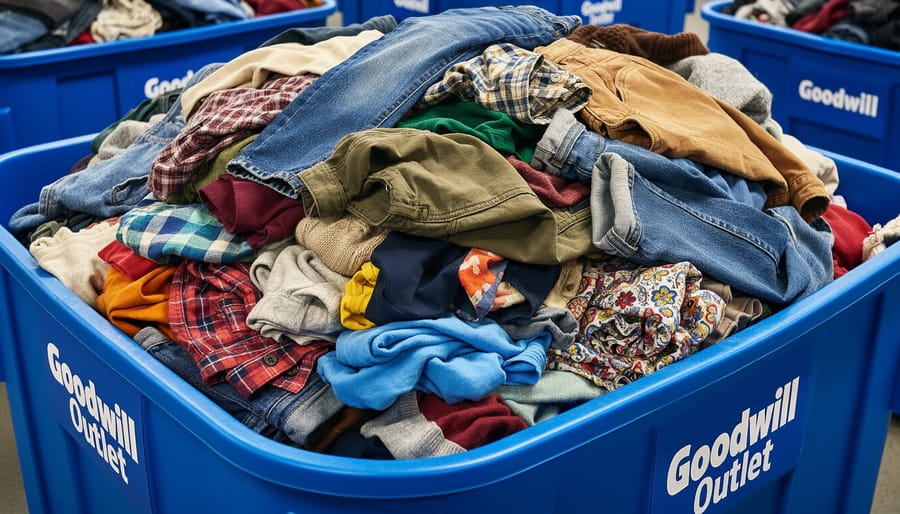
Clothing at the outlets moves fast, so scan for quality markers first: known brand labels, natural fiber content tags, and intact stitching at seams. I’ve learned to do a quick three-point check, hold up the garment, glance at the label and fabric type, run my fingers along seams for loose threads or damage. Denim, wool coats, and 100% cotton pieces hold up remarkably well in the bins, while delicate silks and synthetic blends often show more wear.
Work systematically through a bin section rather than jumping around randomly. Pick a spot, dig down one layer at a time, and create a small “maybe” pile beside you for pieces that need closer inspection. Focus on your size range and skip items with obvious stains or missing buttons unless you’re confident fixing them. The best finds often hide at the bottom or get buried quickly, so gentle but thorough digging pays off. And if you spot something great in your size, grab it immediately, hesitate for two minutes and someone else will claim it.
2. Craft Supplies and Fabric Treasures
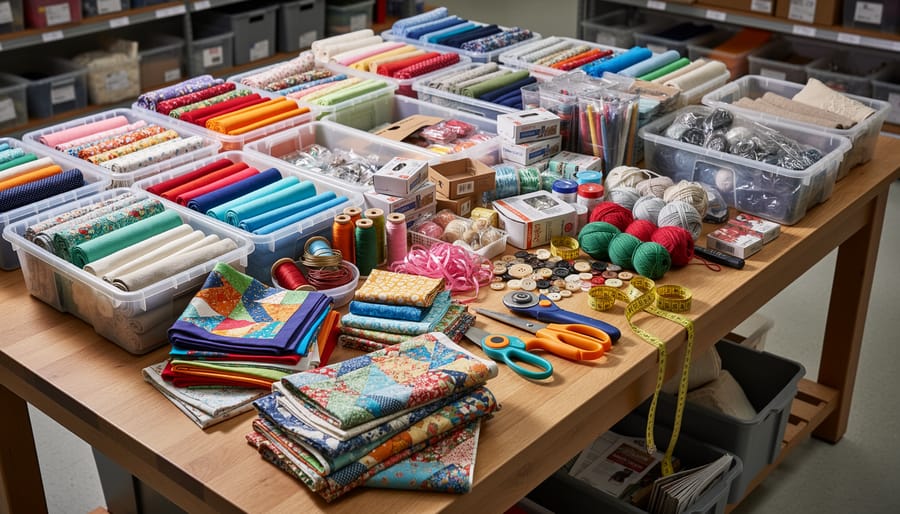
Goodwill Outlets are absolute treasure troves for anyone who sews, crafts, or upcycles. I’ve walked out with entire bags of fabric remnants, buttons, zippers, and trim for under five dollars, materials that would cost twenty times that at a craft store. Look for yardage tucked into bins (cotton, linen, upholstery fabric, even leather scraps), bedsheets you can cut up for quilting, curtains with beautiful patterns, and garment pieces you can harvest for fabric. Don’t overlook the notions: spools of thread, unopened packages of elastic, vintage buttons still on cards, and ribbons. Quality check by feeling the fabric’s weight and checking for stains or holes before tossing it in your cart. Upholstery fabric and wool coats are especially valuable finds, you’re getting premium materials at pennies per pound. If you spot damaged vintage garments, grab them anyway for the zippers, unique buttons, or lace trim you can repurpose.
3. Home Décor and Furniture Pieces
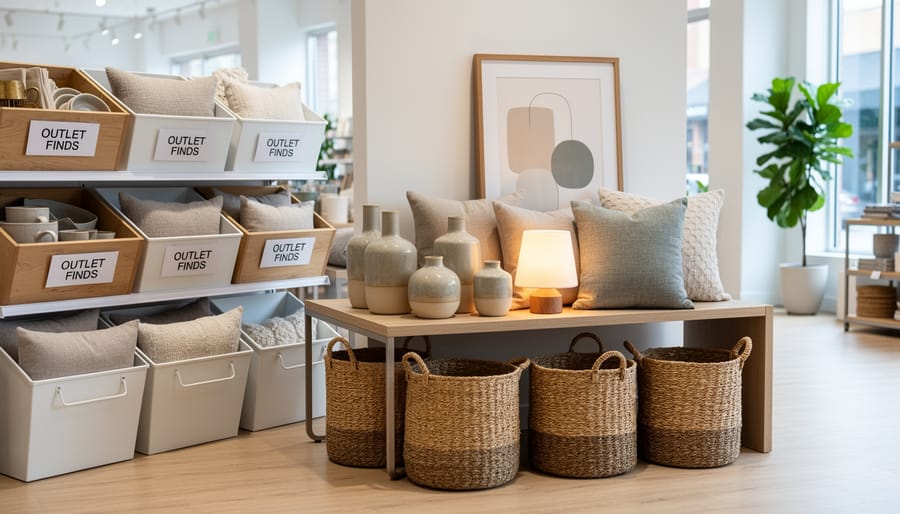
Home décor and furniture pieces offer some of the most exciting discoveries at Goodwill Outlets. Dig through bins for picture frames, vases, decorative bowls, candles, wall art, and small accent furniture like side tables or plant stands. Seasonal décor bins are treasure troves around holidays, you’ll find ornaments, string lights, wreaths, and themed decorations at pennies on the dollar.
Look for items with visible brand names on the bottom or back, as high-quality home goods often hide among generic pieces. Check frames for intact glass and solid construction; even damaged frames work beautifully for DIY projects. Examine furniture carefully for structural soundness, wobbly legs or broken joints aren’t worth hauling home unless you have repair skills.
The best finds are unique vintage pieces with character: brass candlesticks, ceramic planters with interesting shapes, or retro wall clocks. Don’t overlook items with cosmetic flaws, a chipped vase becomes a planter, scratched mirrors get painted frames. Heavy items price by weight, so smaller décor pieces offer better value than bulky furniture.
4. Books, Media, and Vintage Collectibles
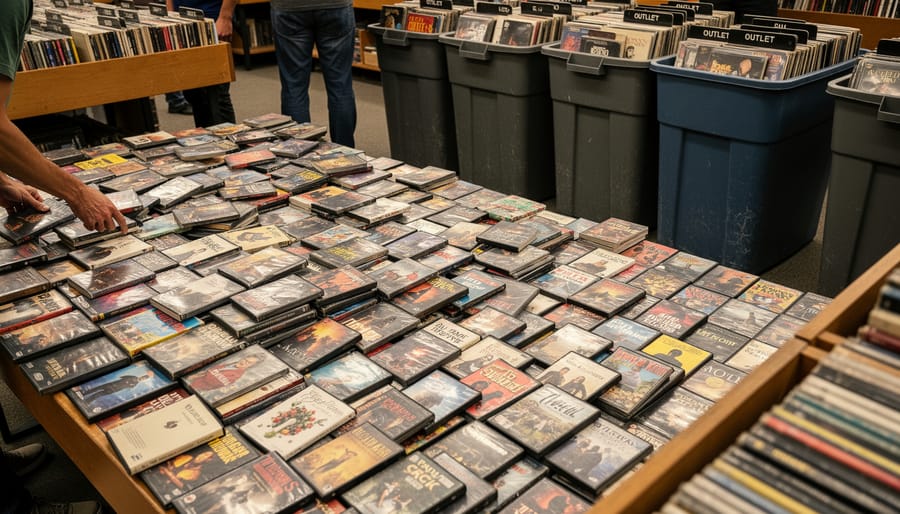
Books, media, and vintage collectibles turn up constantly in outlet bins, often overlooked by shoppers focused on clothing. Flip through book spines quickly, checking for hardcovers, first editions, or niche topics that hold resale value, cookbooks, craft guides, and regional histories often hide among mass-market paperbacks. Vinyl records need a fast condition check: pull the record partway out to inspect for deep scratches or warping, and examine the cover for water damage or splits. DVDs and CDs are hit-or-miss, but box sets, criterion collections, and complete TV series make the dig worthwhile.
Vintage collectibles require a practiced eye since you’re sorting fast. Look for maker’s marks on ceramics, check toy brands and copyright dates, and grab anything with unusual graphics or mid-century design. Small items like vintage buttons, costume jewelry, or advertising tins get lost in the bins but can be valuable finds. Keep a mental list of what sells or interests you personally, knowing your categories helps you scan efficiently when faced with a jumble of miscellaneous items. The key is speed: pick up anything promising, assess it in seconds, and either claim it or move on.
Practical Information for Visiting Goodwill Outlets
Finding Your Local Outlet Hours
The fastest way to know if your outlet is open tomorrow? Head to the official Goodwill website and use their store locator. Type in your zip code, select “Outlet” or “The Bins” from the location filter, and you’ll see your nearest outlet’s current hours. Double-check the details, though, some locations list modified holiday schedules or temporary closures that might not update everywhere online.
Calling ahead works too, especially if you’re planning a trip during unusual hours or want to confirm holiday schedules. Google Business listings often show real-time open/closed status and reviews mentioning recent schedule changes, which can be helpful if the official site feels outdated.
Outlet hours vary wildly by location. Some operate seven days a week, others close Sundays or follow weekday-only schedules:
| Location | Operating Days | Hours |
|---|---|---|
| Milwaukee Outlet | Monday-Saturday | 9am – 7pm |
| Kent, WA Outlet | Sunday-Saturday | 9am – 7pm |
| Some locations | Monday-Friday | 7am – 4pm |
Many outlets have recently dropped Sunday hours or scaled back to six-day operations, so don’t assume weekend availability. If you’re new to outlet shopping, check out our step-by-step outlet guide for everything you need before your first visit.
What to Bring and Wear
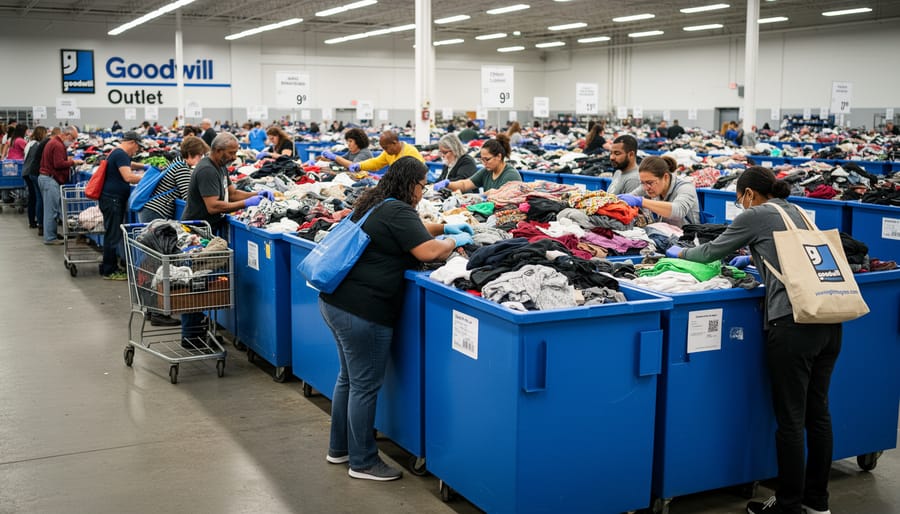
Dress for serious treasure hunting, comfortable, washable clothes you don’t mind getting dusty are essential. Layers work well since outlets can be warm from the activity and crowded spaces. Closed-toe shoes with good traction matter more than you’d think when you’re standing and moving around bins for an hour or two.
Pack smart to make your haul easier and more hygienic:
- Reusable shopping bags or a cart for carrying finds (outlets rarely provide bags)
- Hand sanitizer and disinfecting wipes for cleaning hands between digging sessions
- Disposable or washable gloves if you’re squeamish about dust and grime
- Water bottle to stay hydrated during long treasure hunts
- Cash and cards (most outlets accept both, but smaller locations may be cash-preferred)
- Phone for quick online price checks on potential valuable finds
I’ve learned to keep a dedicated “bin kit” in my car, it saves the scramble of remembering everything before each visit. Your back and shoulders will thank you for bringing that collapsible cart, especially when you score big on books or home goods.
Payment and Pricing
Goodwill Outlets use a pay-by-pound system that makes pricing refreshingly simple. You fill your cart or bag with items, then head to the register where everything gets weighed. Most outlets charge between $1.49 and $1.99 per pound for clothing and soft goods like linens and fabric. Hard goods, dishes, décor, small appliances, typically run slightly higher, around $0.99 to $1.49 per pound. Books and media often fall into their own category at similar rates.
The beauty of this system is that a heavy winter coat costs the same per pound as a t-shirt, so quality pieces become incredible deals. Some outlets offer color-tag discount days where specific tagged items get reduced pricing, though this varies by location.
Most locations accept both cash and cards, but it’s smart to call ahead or check online to confirm payment options at your specific outlet. Bring reusable bags or boxes to carry your haul, since you’re buying by weight and quantities can add up quickly once you start digging.
Local Tips and Insider Strategies
Best Times to Visit
Timing your outlet visit can make the difference between a frustrating dig and a rewarding haul. Early morning shoppers, those arriving right when doors open, get first crack at freshly rotated bins. Most outlets bring out new merchandise in waves throughout the day, but the morning rush means you’re competing with veteran shoppers who know exactly what they’re hunting for.
Weekday afternoons, particularly Tuesday through Thursday between 1pm and 4pm, offer the sweet spot of lighter crowds and decent selection. You’ll have breathing room to dig thoroughly without elbows jostling you aside. Weekends bring the biggest crowds and the most chaotic energy, but also the most frequent rotations as staff work to keep bins filled for high traffic.
Ask staff about your location’s rotation schedule, some outlets refresh bins every hour, others follow a daily pattern. Regular shoppers often know the rhythm by heart and time their visits accordingly. Some locations announce rotations with a bell or announcement, creating a brief feeding frenzy as shoppers converge on fresh bins.
Monday mornings can be hit-or-miss depending on whether your outlet collected weekend donations. Pay attention to patterns over a few visits, and you’ll discover your location’s hidden rhythm, when the best stuff hits the floor and when you can browse in peace.
Bin Etiquette and Smart Shopping
The bins can get competitive, especially during new merchandise rotations, but a little courtesy goes a long way. Give fellow shoppers space to dig, crowding someone’s cart or reaching across them creates tension. If you spot something another person is clearly eyeing, don’t snatch it. Most regulars appreciate when shoppers acknowledge each other with a quick nod or smile, which makes the whole experience more community-minded than cutthroat.
Stay safe by avoiding aggressive digging. Bins can contain sharp objects, broken glass, or items with exposed nails, so don’t plunge your hands in blindly. Work systematically through sections rather than frantically tossing items aside, which helps you catch quality pieces others miss and keeps the bins manageable for everyone.
Building friendly relationships with staff pays off. They often know the rotation schedule and might tip you off about new merchandise hitting the floor. Regular shoppers form a loose network too, I’ve had fellow bin divers point out items I’d love based on past conversations. Strike up casual chats while sorting and you’ll find the outlet community is genuinely helpful. Remember, everyone’s there for the same reason: great deals and the thrill of discovery. Approach it with patience and respect, and you’ll have a better hunt every time.
Common Questions About Goodwill Outlet Shopping
How do I know if my outlet is open tomorrow?
Check your local outlet’s hours on the Goodwill website store locator or call ahead, since schedules vary widely by location. Some outlets are open seven days a week, while others have closed on Sundays or specific weekdays, and hours can range anywhere from early morning to evening depending on the store.
Is the quality of items at outlets good?
You’ll find everything from worn-out pieces to brand-new items with tags still attached. The key is developing an eye for quality quickly, check seams, zippers, and fabric condition as you dig, and don’t be afraid to pass on damaged goods since there’s always more treasure in the next bin.
How much can I actually save shopping at the outlets?
Most outlets charge by the pound, typically ranging from a dollar or two per pound for clothing and soft goods. A full shopping bag of clothes might cost you five to ten dollars total, making it possible to score entire outfits for less than the price of a single thrift store shirt.
Do I need to bring cash or do outlets take cards?
Most Goodwill Outlets accept both cash and cards, but it’s smart to bring some cash just in case your location is cash-only or if card readers go down. Call ahead if you’re planning a big shopping trip and want to confirm payment options.
If you’re feeling nervous about your first outlet visit, that’s completely normal. The bins can feel overwhelming at first glance, but once you dive in and find your first amazing deal, you’ll understand why so many shoppers become regulars. Start with one or two bins, take your time getting comfortable with the pace, and remember that everyone there was a first-timer once. The outlet shopping community tends to be welcoming, and you’ll often find experienced bin shoppers happy to share tips or point you toward fresh merchandise. Give yourself at least an hour for your first visit so you can explore without feeling rushed, and don’t put pressure on yourself to find something spectacular right away. Sometimes the best finds come when you least expect them.
Ready to start your Goodwill Outlet adventure? Whether you’re hunting for your next DIY project, building a sustainable wardrobe on a budget, or simply love the thrill of discovering hidden gems, outlet shopping offers something truly special. Every visit combines environmental responsibility with serious savings and that satisfying rush of finding exactly what you didn’t know you were looking for.
Before you head out, take a moment to verify your local outlet’s hours online or with a quick phone call. Hours vary widely between locations, and some outlets have specific closure days or adjusted schedules. Plan to give yourself at least an hour for your first visit, rushing through the bins means missing treasures and half the fun.
The bins reward patience, persistence, and a sense of adventure. You’ll leave with unique finds you won’t see anywhere else, money in your pocket, and the knowledge that you’re keeping perfectly good items out of landfills. Wear comfortable clothes, bring your reusable bags, and embrace the hunt. Your next favorite piece is waiting in those bins, and the community of fellow thrifters makes every trip an experience worth repeating.