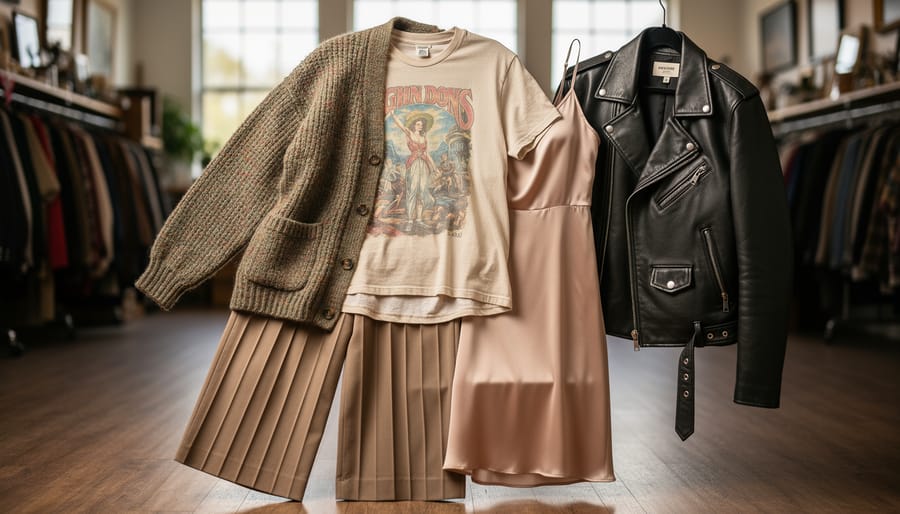
Thrifting in 2026 means hunting for seven standout trends that have taken over secondhand shops: Y2K revival pieces like low-rise denim and baby tees, grandpa cardigans and oversized knits, vintage band tees with bold graphics, wide-leg trousers and pleated pants, leather jackets in moto style, slip dresses with silky layers, and statement blazers with structured shoulders. These aren’t just random finds. They’re what stylish thrifters are scooping up right now because they bridge the gap between nostalgia and modern versatility, and best of all, you can score each one without the retail markup.
The beauty of these trends is that thrift stores are already packed with them. While fast fashion scrambles to replicate vintage vibes, you can walk into your local shop and find the real thing. That worn-in band tee from the ’90s? It’s got more character than anything you’ll find online. Those wide-leg trousers gathering dust in the back rack? They’re exactly what your wardrobe needs.
Here’s the thing: knowing what to look for transforms thrifting from overwhelming to exciting. Instead of wandering aimlessly through racks, you’ll have a focused mission. Each trend comes with specific tips on where to look, what condition details matter, and how to style your finds. Whether you’re after that perfect oversized cardigan or hunting for a silky slip dress to layer, this guide gives you the roadmap to shop smarter and build a closet that’s both sustainable and seriously stylish.
Why Thrifted Trends Matter Right Now
Thrifting has had a major glow-up. What was once seen as a last resort or quirky hobby has become a legitimate style strategy, thanks partly to celebrity fashion influence and Gen Z’s embrace of secondhand shopping. Walk into any thrift store now and you’ll spot twenty-somethings with mood boards on their phones, hunting specific silhouettes instead of just browsing aimlessly. The shift is real: thrifting isn’t about settling anymore. It’s about finding pieces with history, character, and a price tag that doesn’t make you wince.
The environmental case is straightforward. Fashion accounts for roughly 10% of global carbon emissions, and most clothes get tossed within a year. When you thrift, you’re pulling items back into circulation instead of feeding the cycle of overproduction. Your wallet notices too, scoring a genuine leather jacket for $30 instead of $300 means you can experiment with trends without the guilt or debt. But here’s the fun part: shopping with specific trends in mind transforms thrifting from overwhelming to intentional. You’re not digging through endless racks hoping something works. You know you want a slip dress or wide-leg trousers, so you’re hunting with purpose. That focus makes the search feel like a treasure hunt instead of a chore, and when you find that perfect Y2K baby tee or grandpa cardigan, the dopamine hit is unmatched.
1. Y2K Revival Pieces: Low-Rise Denim and Baby Tees
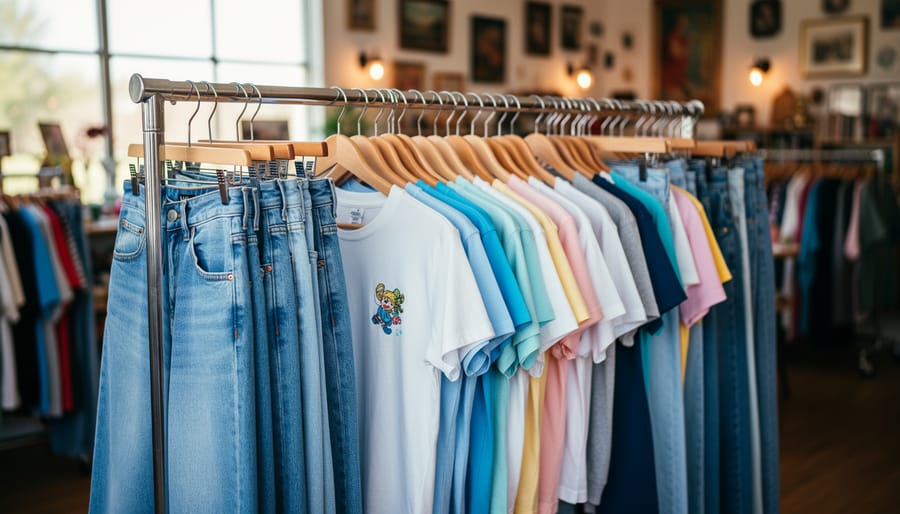
The Y2K aesthetic isn’t going anywhere in 2026, and thrift stores are absolute goldmines for authentic early-2000s pieces that fast fashion brands are desperately trying to recreate. Low-rise jeans and baby tees are the cornerstone of this trend, and finding the real deal gives you both authenticity and that perfectly worn-in feel.
When you’re hunting for low-rise denim, head straight to the jeans section and look for brands like Levi’s, Guess, Abercrombie & Fitch, and True Religion. The key details to spot are visible stitching on the back pockets, bootcut or straight-leg silhouettes, and that signature three to four-inch rise. Check the hem for flare cuts or slight boot accommodation, and don’t skip the darker washes. These tend to look more polished and versatile than the distressed light blues.
Baby tees are everywhere in thrift stores right now, but quality varies wildly. Look for fitted ribbed cotton tees with cap sleeves, graphic prints (think band logos, city names, or quirky sayings), and cropped hems that hit right at your natural waist. Brands like Hollister, American Apparel, and even vintage Gap had great basics.
I found my favorite baby tee last spring at a suburban Goodwill, a pale pink number with “CALIFORNIA” printed across the chest in retro lettering. It was tucked between oversized sleep shirts, and I almost walked right past it. That’s the thrift lesson: slow down and actually touch the fabric.
Style these pieces together for full Y2K nostalgia, or balance them with modern elements. Pair low-rise jeans with an oversized blazer and chunky sneakers, or wear a baby tee under slip dresses for unexpected layering. The contrast between then and now is what makes it feel fresh instead of costumey.
2. Grandpa Cardigans and Oversized Knits
There’s something magical about slipping into a cardigan that’s three sizes too big and feeling instantly cozy. Grandpa cardigans and oversized knits are everywhere in thrift stores right now, and for good reason. These chunky, slouchy sweaters work with everything from slip dresses to wide-leg jeans, and they’re the perfect antidote to years of form-fitting knitwear.
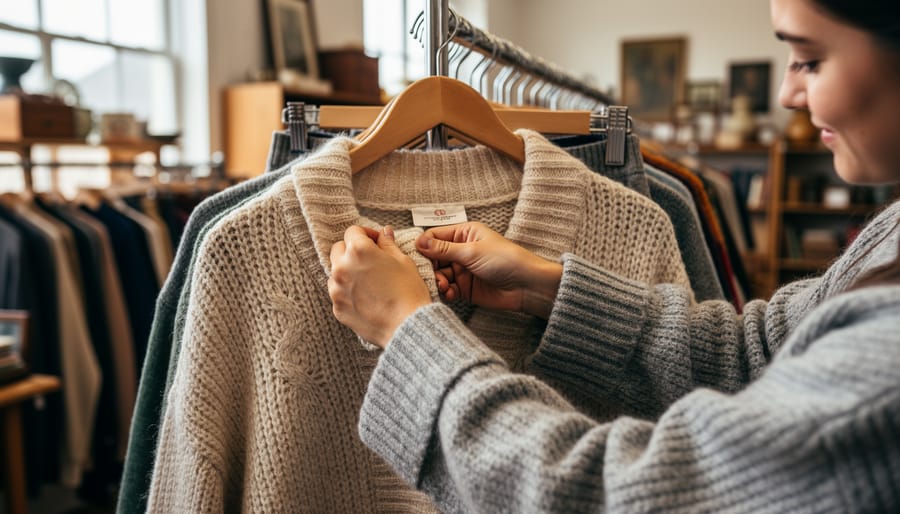
The beauty of thrifting oversized knits is that what once fit someone’s dad or grandpa in the 90s is now exactly the relaxed silhouette everyone wants. Look for cardigans with wooden buttons, cable knits, or Fair Isle patterns. Neutral tones like oatmeal, forest green, and chocolate brown are easiest to style, but don’t sleep on a wild geometric print if it speaks to you.
Quality matters more with knitwear than almost any other thrifted category. Before you commit to a cardigan, check these details:
- Fiber content labels for wool, cashmere, alpaca, or cotton blends
- Pilling across the body and sleeves, which signals heavy wear
- Moth holes, especially around seams and under arms
- Stretch test by gently pulling the cuffs to see if they bounce back
Natural fibers breathe better, last longer, and actually get softer with age. Acrylic sweaters can work for layering, but they pill faster and won’t have that luxurious hand-feel.
Styling oversized knits is more forgiving than you’d think. Petite frames can belt them at the waist or tuck just the front into high-waisted bottoms. Taller people can lean into the full oversized effect with bike shorts or straight-leg jeans underneath. Try layering a fitted turtleneck under an open cardigan, or throw one over a slip dress with chunky boots. The whole point is looking effortlessly pulled together, like you raided someone’s incredibly well-curated closet.
3. Vintage Band Tees and Graphic Prints
The hunt for a perfect vintage band tee is like a treasure hunt that never gets old. I once spent three thrift trips searching for a Fleetwood Mac shirt, only to find an original 1977 tour tee tucked between workout tanks at a Goodwill in Portland. That’s the magic of this trend: every piece tells a story, and in 2026, everyone wants to wear those stories.
Authentic vintage band tees from the 70s through early 90s are thrift gold. Look for single-stitch construction along the sleeves and hem (a telltale sign of pre-1990s production), softer cotton that’s been washed a hundred times, and screen-printed graphics with slight cracking. Tags matter too: check for RN numbers and printing locations. If the tag says Made in Honduras or Nicaragua, it’s likely a modern reproduction.
Don’t write off newer graphic tees entirely, though. Thrift stores overflow with 2000s concert merch and quirky prints that capture the same spirit at gentler price points. I’ve scored incredible oversized graphic tees from local bands and forgotten tours for under five dollars.
Pricing varies wildly. Expect to pay fifteen to thirty dollars for most vintage band tees at regular thrift stores, but genuinely rare tour shirts (think original Nirvana, Prince, or early Madonna) can command fifty dollars or more, even secondhand. Assess condition carefully: small holes near the hem are fixable and shouldn’t break the deal, but avoid heavy pit stains or graphics that are more ghost than print.
Style them like you borrowed them from someone cool. Tuck a fitted band tee into high-waisted jeans, layer an oversized one under a slip dress, or knot it at the waist with wide-leg trousers. The key is balance: keep the rest of your outfit simple so the graphic stays the star.
4. Wide-Leg Trousers and Pleated Pants
If you’ve been holding onto skinny jeans out of habit, thrift stores are about to change your mind. Wide-leg trousers and pleated pants are everywhere right now, and secondhand shops are packed with them. The best part? These relaxed silhouettes from past decades fit right into 2026 trends without looking costume-y.
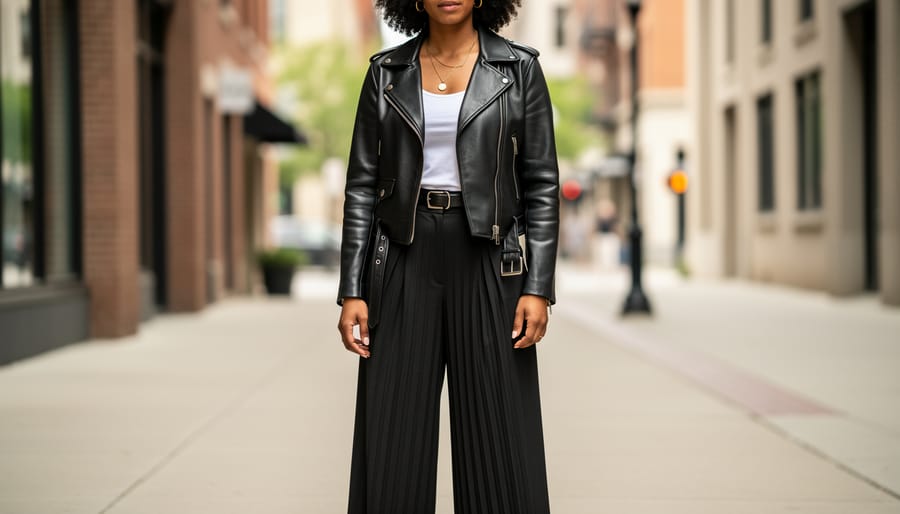
Your sweet spot for thrifting wide-leg pants is the 1970s and 1990s. Seventies styles bring you high-waisted, flowing trousers in corduroy, denim, and printed fabrics. Think earth tones, occasional bell-bottom flares, and that effortlessly groovy vibe. Nineties pieces lean into pleated dress pants, relaxed-fit chinos, and those gloriously slouchy jeans that sit comfortably at your natural waist. Both eras understood that pants don’t need to cling to be flattering.
When you’re browsing the racks, check the waist and rise first. A slightly-too-big waist is easy to fix with a belt or quick tailoring, but getting the rise right matters for proportion. Hold them up to your body and imagine where they’ll hit. Wide legs work best when the waist sits at or above your natural waistline, creating that balanced, elongated look.
Don’t stress if the hem pools on the floor. A local tailor can adjust the length for twenty bucks or less, and that small investment transforms thrifted pants into custom-fit pieces. I once found incredible wool trousers that dragged six inches too long. One trip to the alterations shop later, they became my most-worn winter pants.
Pair wide-leg styles with fitted tops to balance the volume. Tuck in a slim tee, add a cropped sweater, or try a bodysuit. The contrast between relaxed bottoms and a defined waist keeps the look polished instead of swamped.
5. Leather Jackets and Moto Style
A good leather jacket is one of those rare wardrobe investments that only gets better with time, and thrift stores are absolutely stuffed with them right now. The moto style, think asymmetrical zips, belted waists, and that perfectly slouchy shoulder, is having a huge moment in 2026, and honestly, buying one secondhand just makes sense. You skip the stiff, uncomfortable break-in period (someone else already did that for you), save hundreds of dollars, and walk away with a jacket that has actual character.
When you’re hunting through the racks, quality is everything. Real leather feels substantial and slightly cool to the touch, while faux leather often has a plasticky texture and smell. Check the tag, but also trust your hands, genuine leather has natural grain variations and doesn’t look perfectly uniform. The lining matters too. Silk, rayon, or quilted linings suggest a better-made piece than cheap polyester.
Color and style are personal, but black moto jackets are the most versatile. Brown and cognac tones add warmth to fall outfits, while burgundy or forest green can be statement pieces if you’re feeling adventurous. Don’t shy away from slightly oversized jackets, they layer beautifully over hoodies and chunky sweaters, which is exactly how people are wearing them now.
Once you score your jacket, a little TLC goes far. Wipe it down with a damp cloth, then apply leather conditioner to restore moisture and prevent cracking. I keep a small tin of conditioner and treat mine every few months. For serious odors, hang it outside on a breezy day or use a leather-safe spray. The patina and worn-in softness you get from a thrifted leather jacket? You literally cannot buy that new.
6. Slip Dresses and Silky Layers
Slip dresses are having a major moment, and here’s the best part: thrift stores are absolutely loaded with them. The 90s gave us an avalanche of silky slips in every color and length, and they’ve been waiting in secondhand racks for exactly this comeback.
When you’re hunting, head straight to the dress section and look for anything with spaghile straps and that smooth, drapey hand-feel. Raid the nightwear section too, because some of the best finds hide there. Real silk feels cool to the touch and has a subtle matte sheen, but don’t sleep on quality polyester satin from the 90s. It washes easier and costs less. Check the bias cut, those diagonal seams that make the dress hug and flow at the same time. Minor snags or a loose strap are easy fixes, but avoid anything with underarm staining that won’t come out.
The layering possibilities make slip dresses ridiculously versatile. In warmer months, throw one over a fitted white tee or under a denim jacket. When it gets chilly, layer a chunky cardigan or turtleneck underneath, letting the silky hem peek out. I’ve worn the same black slip dress to a wedding with heels and a leather jacket, then later with combat boots and an oversized blazer for drinks. That’s the magic of this piece.
Fabric care is non-negotiable. Hand wash silk in cool water with gentle detergent or use the delicate cycle in a mesh bag. Never wring it out. Hang dry away from direct sunlight, and if you’re dealing with stubborn thrift store smell, add white vinegar to the rinse. Steam wrinkles instead of ironing directly, or use a pressing cloth if you must iron.
7. Statement Blazers and Structured Shoulders
Power dressing is back, and thrift stores are loaded with incredible statement blazers that bring instant polish to any outfit. Those structured shoulders and sharp tailoring from the 80s and 90s? They’re not just nostalgic, they’re the foundation of a trend that’s dominating 2026 street style and red carpets alike.
When you’re hunting for vintage blazers, flip them inside out to check the construction. Quality pieces have fully lined interiors, neat seams, and sometimes even hand-stitched details. Look for natural fibers like wool, linen, or wool blends, they hold their shape better and age beautifully. The shoulders should feel substantial but not comically stiff; that sweet spot between structure and wearability is what you’re after.
Don’t shy away from those bold 80s silhouettes with exaggerated shoulders. The secret to modernizing them is breaking the suit. Pair an oversized blazer with bike shorts and sneakers, or throw it over a slip dress with combat boots. For a polished take, try wearing it with high-waisted jeans and a simple tank, the blazer does all the talking. This is where mastering ensemble fashion really pays off; you’re building a complete look around one standout thrifted piece.
Blazers are everywhere in thrift stores, but the gems require patience. Hit up estate sales for designer labels, or check out Goodwill Outlet tips for scoring high-quality pieces at unbeatable prices. Try them on over whatever you’re wearing, sometimes a “too big” blazer becomes the perfect oversized statement.
A $12 thrifted blazer can transform your entire wardrobe. It’s the piece that makes jeans feel intentional and dresses feel editorial.
Your Thrifted Trend Shopping Game Plan
Ready to put these trends into action? Shopping thrift stores strategically turns browsing into treasure hunting. Weekday mornings offer the best selection with fewer crowds, while many stores restock midweek. If you can’t make it in person, online thrift shopping opens up endless options from your couch.
- Hit stores on Tuesday through Thursday for fresh inventory and calmer aisles
- Bring a measuring tape and know your key measurements, especially for vintage sizing
- Browse every section, not just your usual department
- Try pieces in unexpected ways, holding them up against different items
The secret to developing your thrift eye? Go often, even if you don’t buy anything. You’ll start recognizing quality fabrics by touch, spotting good construction details, and training yourself to see potential in pieces that others overlook. Some trips yield nothing, and that’s completely normal. The best finds happen when you’re relaxed and enjoying the hunt rather than desperately searching for something specific. Trust your instincts, be patient with the process, and remember that every experienced thrifter started exactly where you are now.
Common Questions About Thrifting On-Trend Pieces
So you’ve got your eye on those trending pieces, now let’s tackle the practical questions that come up when you’re actually out there hunting through the racks.
How often do thrift stores get new inventory?
Most thrift stores restock daily or several times a week, with weekdays typically seeing fresh donations processed overnight. Your best bet is calling your favorite stores to learn their specific restocking schedule, then planning your visits accordingly.
Can you return thrifted items?
Return policies vary wildly, some chains offer 7-14 day exchanges, while smaller shops operate strict all-sales-final policies. Always ask before you buy, and when in doubt, be really sure about your purchase before heading to the register.
How do you clean thrifted clothes safely?
Start by checking care labels, then wash items inside-out in cold water with gentle detergent. For delicate vintage pieces like slip dresses or band tees, hand washing is safer, and I always air-dry anything I’m not 100% sure about to avoid shrinkage disasters.
Are thrifted trends actually cheaper than fast fashion?
Usually yes, but it depends on your location and patience. A quality leather jacket that’d cost $80-150 new often runs $15-40 at thrift stores, and those statement blazers can be just $8-20 compared to $50+ for fast fashion versions.
The cleaning question deserves a bit more attention, honestly. I’ve learned the hard way that vintage knits and anything with embellishments need extra TLC. For those grandpa cardigans, a wool-specific wash works wonders, and graphic tees should always be turned inside-out to protect the print. When you score a great find, taking ten extra minutes to care for it properly means you’ll actually get to wear it instead of accidentally ruining it in the first wash.
Now you’re armed with the best thrifted trends for 2026 and exactly how to hunt them down. The real magic happens when you’re digging through racks and spot that perfect wide-leg trouser or grandpa cardigan that nobody else saw coming. You’re not just shopping, you’re curating a wardrobe that’s uniquely yours while keeping clothes out of landfills and money in your pocket.
Every thrift trip is different. Some days you’ll score an incredible leather jacket; others, you’ll leave empty-handed but wiser about what you’re looking for. That’s part of the adventure. Your finds tell a story that no mall haul ever could, and you’re participating in the most sustainable fashion movement happening right now.
Grab your reusable bag and hit those thrift stores with fresh eyes. When you find something amazing, snap a pic and share it, your discovery might inspire someone else’s next great find. Happy thrifting!