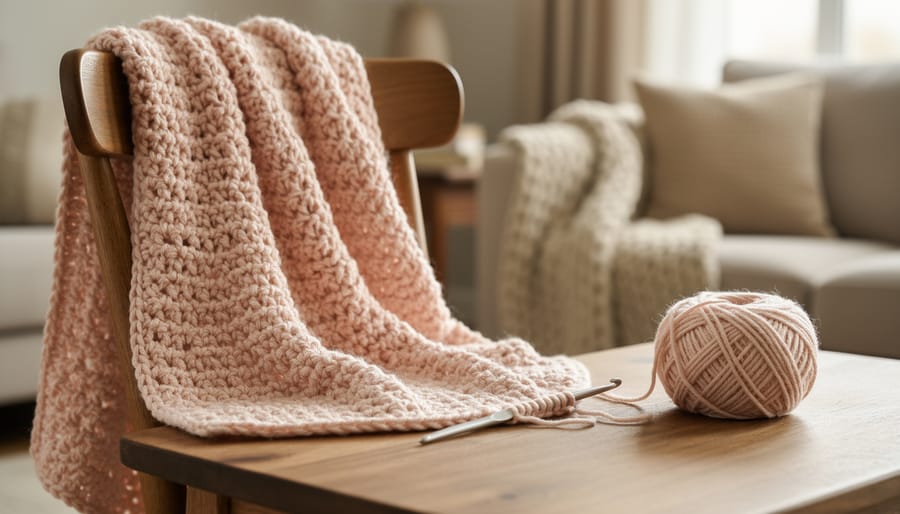
Finding gorgeous free crochet shawl patterns that won’t intimidate you is absolutely possible, and you don’t need to master fancy stitches or spend hours decoding complicated instructions. The best beginner-friendly shawl patterns rely on just the basics (single crochet, half double crochet, double crochet, and chains), use simple row repeats you can memorize quickly, and work up beautifully whether you choose cozy wool for chilly evenings or breathable cotton for warmer months. Much like comparing thrifted vs. retail finds, sourcing free patterns means you get all the style without the price tag.
If you’ve been scrolling through stunning shawl photos feeling equal parts inspired and overwhelmed, you’re in exactly the right place. I’ve rounded up patterns that deliver that “I can’t believe I made this” moment without requiring you to learn new techniques or decipher cryptic abbreviations. Each pattern in this collection has been chosen because it passes the real beginner test: straightforward instructions, forgiving stitch patterns that look intentional even if your tension wobbles a bit, and designs that look far more impressive than the effort required.
The beauty of shawl projects as a budget-friendly DIY is that you can customize everything. Wool and acrylic yarns create perfect fall and winter wraps, while cotton or cotton blends work wonderfully for breezy spring and summer layers. You’ll find options that work with whatever yarn weight speaks to you, and most patterns are flexible enough to adapt if you want to switch things up mid-project.
Why These 7 Shawl Patterns Made the Cut
I’ll be honest, scrolling through Pinterest boards labeled “beginner shawl patterns” only to find complicated lace charts or vague “just wing it” instructions gets old fast. When I set out to find genuinely easy patterns for this list, I had specific non-negotiables: every single pattern had to be actually free (not a teaser for a paid download), rely only on stitches you’d learn in your first week of crocheting, and feature straightforward row repeats that won’t leave you squinting at confusing diagrams.
Here’s what made a pattern worthy of this roundup:
- Only basic stitches, single crochet, half double crochet, double crochet, and chains
- Completely free written patterns with no hidden paywalls or newsletter gates
- Simple row repeats you can memorize after the third row
- Yarn flexibility across wool, acrylic, cotton, and blends for different budgets and seasons
- Clear beginner-appropriate instructions without assumptions about advanced techniques
Seasonal adaptability mattered too. Some patterns work beautifully with wool or acrylic for cozy fall and winter wraps, while others shine in cotton or cotton blends for breezy spring and summer layers. I wanted options that’d carry you through the whole year, not just one season.
The biggest filter, though? I tested whether each pattern would frustrate a first-time shawl maker. If the increases felt confusing, the stitch count changed unpredictably, or the instructions assumed knowledge you don’t have yet, it didn’t make the cut. These seven patterns passed that real-world test, they’re forgiving enough to hide minor tension wobbles and satisfying enough to actually finish.
1. Rivers Shawl, Your First Triangle Shawl
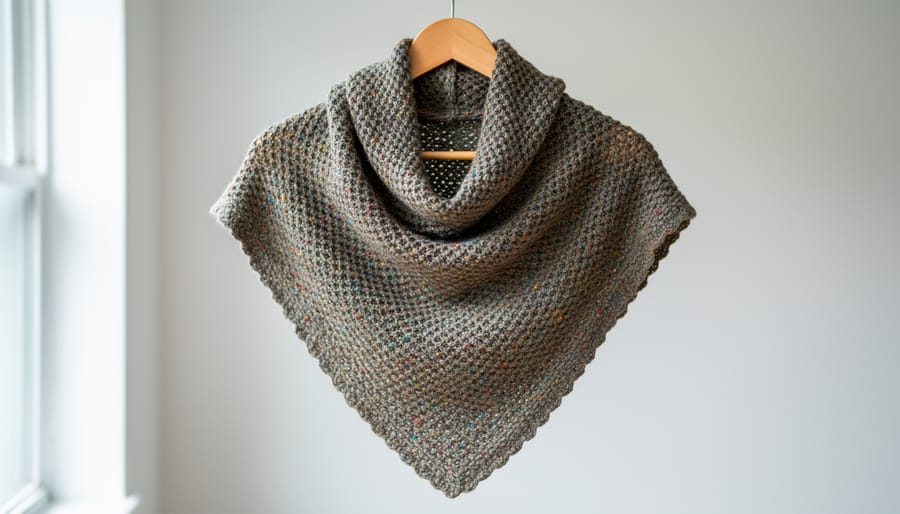
The Rivers Shawl stands out as an excellent first triangle shawl because it removes the guesswork that often intimidates beginners. Made with Mandala Tweed yarn by Lion Brand, this pattern shows you exactly how a triangle shawl grows from a small starting point into a full wrap without requiring you to count endless increases or decode complicated shaping instructions.
What makes this pattern genuinely beginner-friendly is its straightforward row repeats. You’ll work the same simple stitch sequence over and over, which means once you’ve completed the first few rows, you’ve essentially learned the entire pattern. No surprise stitches appear halfway through, and you won’t need to keep checking back to see what comes next. The repetitive nature actually helps you develop consistent tension, a skill that matters more than fancy stitches when you’re starting out.
The Mandala Tweed yarn adds subtle color shifts as you work, creating visual interest without requiring you to change yarns or weave in multiple ends. This self-striping effect gives your finished shawl a polished, intentional look even if your stitches aren’t perfectly uniform yet.
Triangle shawls drape beautifully across your shoulders and the pointed shape lies flat without bunching. The Rivers Shawl works equally well as a lightweight layering piece or a cozy wrap, depending on how you style it. If you’ve been hesitant to try a shaped shawl because you’re worried about the construction, this pattern proves that triangle shawls can be just as approachable as rectangular wraps.
2. Classic Rectangle Wrap, The Easiest Start
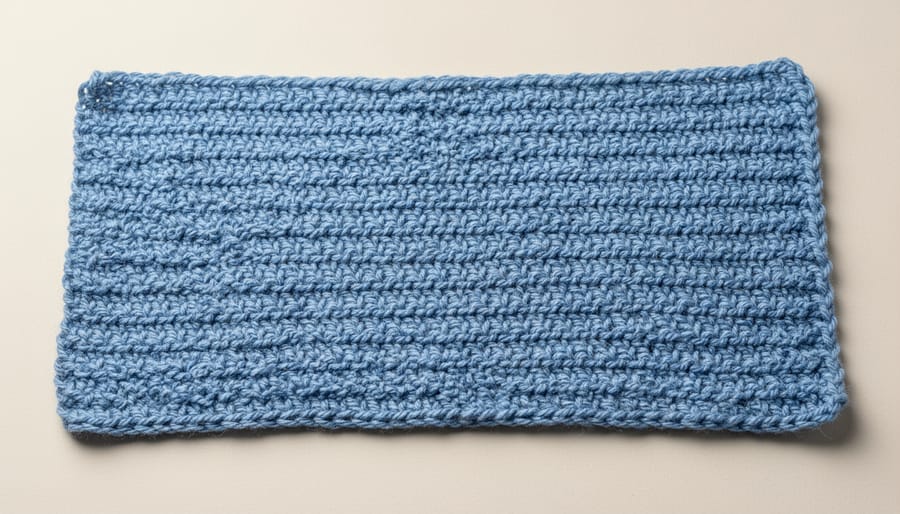
The rectangle wrap is where every beginner should start. You’re working straight rows of double crochet from one end to the other, no increases, no shaping, no counting where you are in a complicated pattern. Cast on your starting chain (anywhere from 50 to 70 chains depending on how wide you want it), then work row after row of double crochet until the piece reaches your desired length. That’s it.
This simplicity lets you focus entirely on maintaining consistent tension, which is the skill that matters most when you’re starting out. If your stitches get tighter or looser as you work, you’ll notice immediately in a rectangle, and you can adjust without worrying about messing up a shape. The repetitive motion also builds muscle memory fast, within a few rows, your hands will find their rhythm.
Yarn choice is completely flexible here. Wool or acrylic works beautifully for a cozy wrap you can throw on during chilly fall evenings or layer over a coat in winter. Cotton or cotton blend yarn creates a lightweight drape that won’t feel heavy in spring or overheat you in air-conditioned summer spaces. Thrift stores often stock discontinued yarn at a fraction of retail prices, making this an incredibly budget-friendly project.
The finished rectangle drapes elegantly over your shoulders, and you can wear it loose, belted, or pinned with a vintage brooch. It’s proof that the simplest patterns often make the most versatile pieces.
3. Sideways Sampler Shawl, Asymmetrical Triangle Style
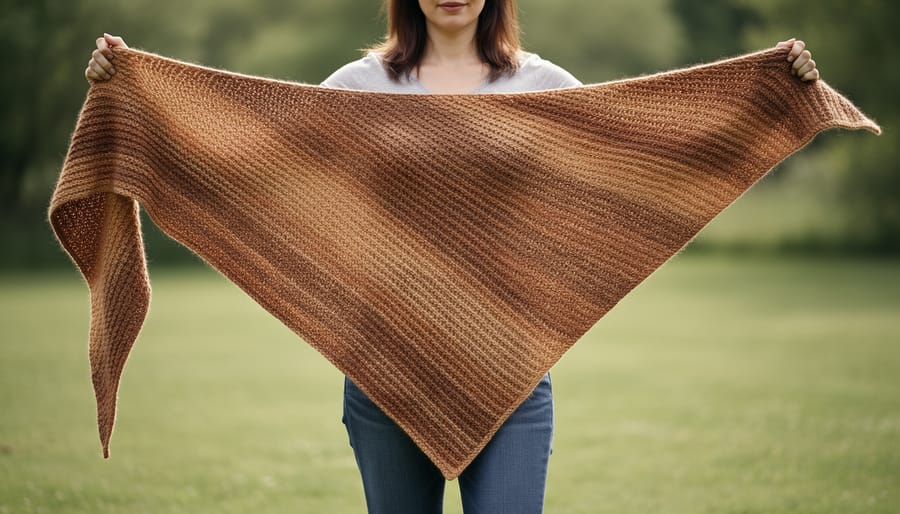
Once you’re comfortable with basic increases and want something that looks more sophisticated without adding difficulty, the sideways sampler shawl makes a perfect next step. This asymmetrical triangle pattern grows along its long edge instead of from the point outward, which creates a distinctive diagonal texture that looks intentional and stylish.
The sideways construction means you’re working with manageable row lengths throughout the project rather than watching your rows get longer and longer like traditional triangle shawls. You’ll repeat a simple combination of single crochet, double crochet, and chains in a set sequence that creates subtle visual interest without requiring you to learn new techniques. The stitch sampler effect comes from how these basic stitches stack at different heights, not from complicated stitch patterns you need to memorize.
This approach works especially well if you’re still building confidence with your tension. The varied stitch heights naturally create texture that disguises any minor inconsistencies in your gauge, making it more forgiving than single-stitch patterns where every uneven stitch shows. You’ll work with wool, acrylic, or cotton blend yarn depending on your season and preference, keeping the same straightforward row repeats regardless of fiber choice.
The finished shawl drapes beautifully over one shoulder or wraps asymmetrically, giving you a contemporary look that doesn’t broadcast “beginner project.” It’s an ideal choice when you want to feel like you’re progressing as a crocheter without actually taking on advanced techniques.
4. Simple Granny Stripe Shawl, Color Play Made Easy
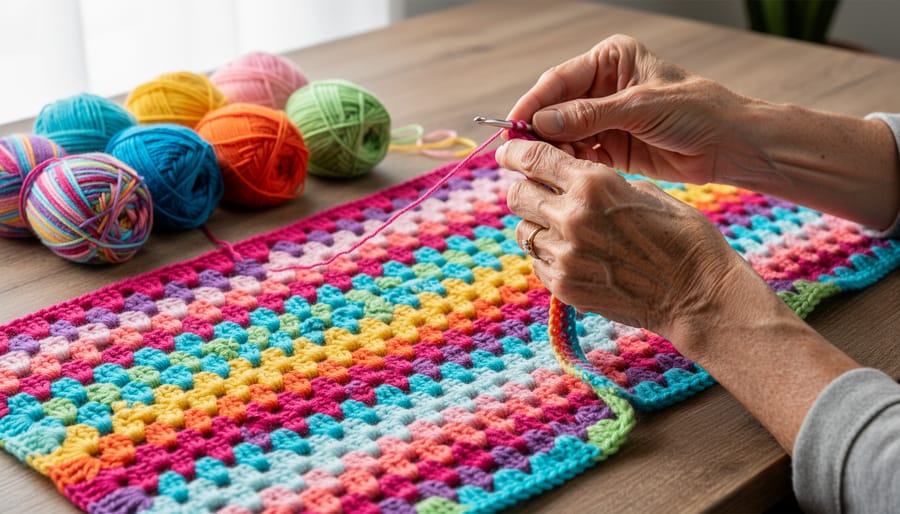
The granny stripe shawl brings cheerful color blocking to your beginner crochet journey without any tricky techniques. This pattern uses the classic granny stitch, clusters of double crochet separated by chains, repeated in simple rows that build a rectangular wrap perfect for draping across your shoulders.
What makes this pattern especially forgiving is how the stripe transitions naturally camouflage any tension wobbles. When you switch yarn colors every few rows, slight differences in stitch tightness blend right into the design instead of standing out as mistakes. Your third row might be tighter than your tenth, but the color change draws the eye away from minor inconsistencies that would show plainly in solid-colored work.
This is where your yarn stash becomes your creative playground. Got three partial skeins of acrylic in teal, coral, and cream from past projects? Perfect. Found mismatched wool yarns at a thrift store sale? Even better. The granny stripe construction lets you combine leftover yarns of similar weight into a coordinated piece that looks deliberately designed rather than thrifted together. Plan your color sequence before starting, alternating two colors creates bold stripes, while rotating through four or five builds a scrappy, bohemian vibe.
The repeating pattern also builds muscle memory quickly. After your first few color changes, your hands will know exactly where to place each cluster without constant pattern checking. You’ll finish with a statement shawl that showcases your personal color choices while proving you’ve mastered consistent stitch spacing across multiple rows.
5. Half Double Crochet Triangle, Cozy and Quick
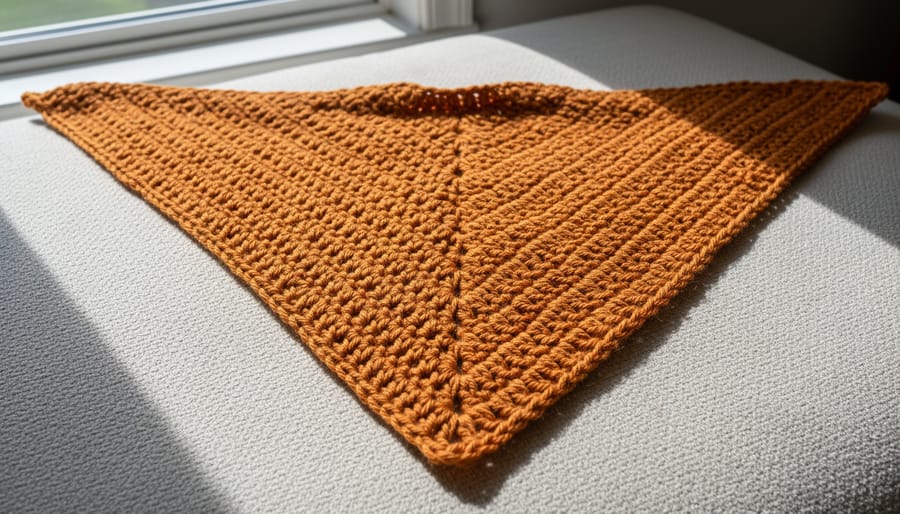
This triangle shawl pattern proves that sticking with one stitch doesn’t mean boring results. The half double crochet creates a slightly denser fabric than double crochet but works up faster than single crochet, making it the sweet spot for beginners who want a cozy finished piece without spending weeks on it.
The construction is straightforward: you start with a few chains at the top point of the triangle and increase at both ends of every row as you work your way down. The half double crochet stitch naturally creates a lovely textured surface with just enough visual interest to keep you engaged without requiring pattern counting or stitch markers. You’ll fall into a rhythm quickly, which makes this an excellent project for mindless evening crafting while you watch TV.
What makes this pattern particularly satisfying for fall and winter is how the single-stitch approach creates warmth without bulk. Whether you choose wool for traditional coziness or acrylic for easy washing and budget friendliness, the half double crochet produces enough drape to wear comfortably while still feeling substantial around your shoulders. I made one last October using a burgundy acrylic yarn I found at a thrift store for three dollars, and it became my go-to wrap for chilly mornings all season.
The real beauty is how forgiving this pattern is. Because there’s no complicated stitch pattern to maintain, slight tension variations won’t ruin the overall look. You just keep increasing and crocheting until your shawl reaches the size you want.
6. Lightweight Cotton Summer Shawl, Breezy Basics
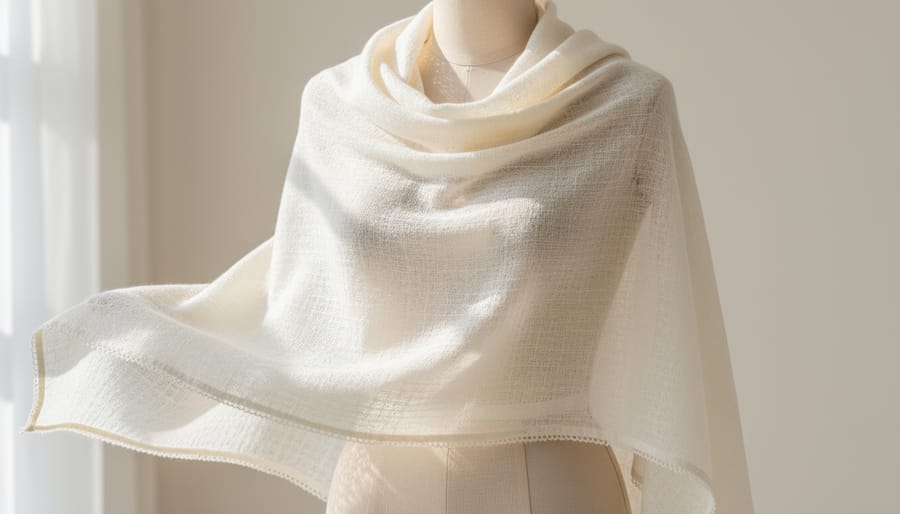
When the temperature climbs but you still want a layer for breezy evenings or over-air-conditioned restaurants, a lightweight cotton shawl becomes your best friend. This pattern uses airy stitch combinations, primarily chains and double crochet stitches, to create an open, breathable fabric that drapes beautifully without weighing you down.
The construction is straightforward: you’ll work simple chain spaces alternated with double crochet clusters in repetitive rows that are almost impossible to mess up. The chain spaces create natural holes that let air flow through, keeping you comfortable rather than sweaty. I made my first cotton summer shawl for outdoor concerts, and it became the piece I grabbed constantly for those unpredictable summer nights when I wasn’t quite cold but wanted something around my shoulders.
Cotton yarn gives this shawl a completely different feel than wool versions. It has a crisp hand and holds its shape without stretching out, plus it’s machine washable, which matters when you’re wearing it outdoors. You can find cotton or cotton blend yarn affordably at craft stores during summer clearance sales, or check out thrift store tips for scoring discontinued yarn lots at a fraction of retail price.
Like other free crochet patterns designed for beginners, this one doesn’t require you to learn new complicated stitches, just basic chains and double crochet worked in an easy repeat that builds muscle memory fast.
7. Beginner’s Prayer Shawl, Mindful Stitching
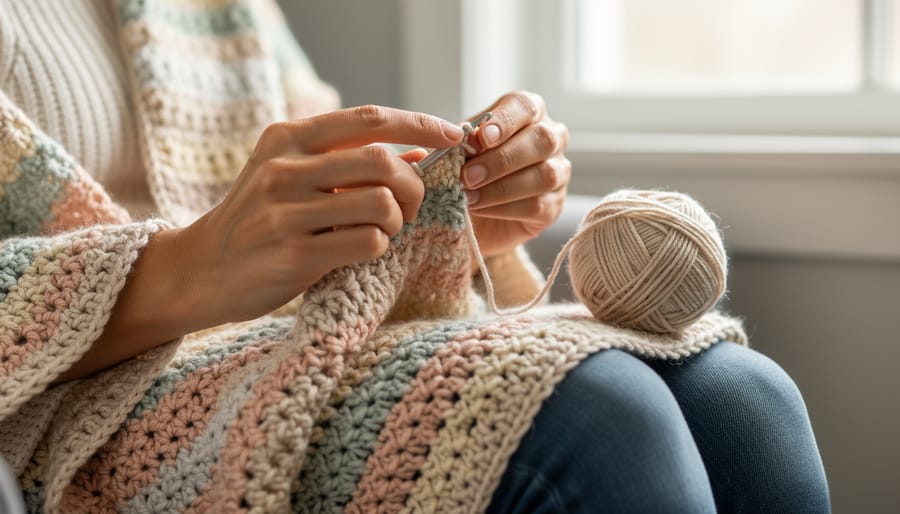
The prayer shawl stands apart from ordinary projects, it’s designed for meditative making as much as for wearing. This pattern uses alternating rows of single crochet and double crochet in a simple, soothing rhythm that quiets your mind while your hands work. The repetitive stitch sequence requires no counting or pattern-checking once you’ve established the first few rows, letting you crochet while watching TV, listening to audiobooks, or simply enjoying the feel of yarn sliding through your fingers.
The therapeutic value of repetitive crochet work is real. Each row becomes a small meditation, the consistent motion helping ease stress and anxiety in a way scrolling your phone never will. You don’t need special skills for this pattern, just the two most basic stitches worked back and forth until you reach your desired length, typically around 60 inches long and 24 inches wide for a traditional prayer shawl.
I’ve made three of these as gifts for friends going through difficult times, and the process of making them felt as healing as I hope receiving them did. The simplicity means you can focus on the intention behind each stitch rather than wrestling with complicated techniques.
Choose soft, comforting yarn for this project, acrylic or wool works beautifully, and you’ll need about 1,000 yards for a full-size shawl. The gentle weight and drape create something genuinely soothing to wrap around shoulders during moments that call for comfort.
Choosing Your Yarn: Seasonal Considerations
The yarn you choose dramatically changes how your shawl feels, drapes, and keeps you comfortable through the seasons. For fall and winter shawls, wool and acrylic yarns are your best friends, they trap warmth beautifully and create that cozy heft you want when temperatures drop. Wool brings natural breathability and a luxurious hand feel, while acrylic offers excellent warmth at a fraction of the cost and stands up better to frequent washing. I’ve made winter wraps in both, and honestly, a good acrylic blend can feel just as comforting as pure wool when you’re curled up with a book.
Spring and summer call for completely different fibers. Cotton or cotton blend yarn creates lightweight shawls with beautiful drape that won’t make you overheat. These breathable options are perfect for breezy evening walks or over-air-conditioned office spaces. Cotton also shows stitch definition clearly, which can be encouraging when you’re learning and want to see your progress. Some cotton blends incorporate bamboo or linen for even more breathability and a silky texture that feels wonderful against bare skin.
Don’t feel pressured to buy expensive yarn for your first shawl. Many craft stores run frequent sales where you can snag acrylic or cotton for two or three dollars a skein. I started my crochet journey with clearance bin yarn, and those early projects taught me everything I needed to know about tension and stitch consistency before I invested in pricier materials.
Getting Started: What You Actually Need
You don’t need to raid a craft store or spend a fortune to start making your first shawl. I borrowed my grandmother’s old aluminum hook for my first three projects, and honestly, that beat-up thing worked perfectly fine. Here’s what you actually need to get going with any of these free crochet projects:
A crochet hook in the size recommended by your chosen pattern, typically between 5mm and 6mm for most beginner shawls. You can find inexpensive hooks at dollar stores or thrift shops if you’re just testing the waters.
Yarn that matches your pattern’s weight recommendation. Most of these shawls call for worsted or DK weight. Wool and acrylic work beautifully for cozy fall and winter shawls, while cotton or cotton blends create breezy wraps for warmer weather. Start with acrylic if you’re on a tight budget since it’s washable and forgiving.
Sharp scissors for cutting yarn cleanly. Kitchen scissors work fine.
A tapestry needle for weaving in ends when you finish. These cost about a dollar for a pack.
That’s it. No fancy stitch markers, no blocking wires, no elaborate tool kits. Save your money for yarn you’ll actually love wearing. The patterns themselves are free, so there’s zero reason to overcomplicate the supply list or talk yourself out of starting.
Common Questions About Free Crochet Shawl Patterns
Are free crochet shawl patterns really complete and usable?
Yes, the vast majority of free shawl patterns include full instructions with stitch counts, row-by-row guidance, and finishing details. Quality free patterns are just as complete as paid ones, designers share them to build community and inspire crafters.
Do I need to know how to read crochet charts?
Not necessarily. Many beginner-friendly patterns offer written instructions rather than charts, describing each row in plain language. If a pattern includes both, you can stick with the written version until you feel ready to tackle chart reading.
How long does it take a beginner to crochet a shawl?
A simple shawl using basic stitches typically takes 10-20 hours of actual crochet time for a beginner. That might spread over several evenings or weekends, depending on your pace and available crafting time.
Can I modify the size of a shawl pattern?
Absolutely. Most patterns adapt easily by working more or fewer rows, or by starting with a longer foundation chain for rectangles. Triangle shawls grow naturally as you add rows, so you can stop when you reach your preferred size.
What if I make mistakes while crocheting?
Mistakes happen to everyone, and crochet is wonderfully forgiving. You can pull out stitches back to the error and redo that section. Simple shawl patterns with repeating rows make it easier to spot and fix mistakes before they travel too far.
The beauty of starting with these straightforward patterns is that they’re genuinely mistake-tolerant. Textured stitches and stripe patterns hide minor tension variations that might show up in smoother fabrics. If you drop a stitch or miscount in one row, the simple construction makes it easy to backtrack without losing your place in a complicated stitch pattern. Most beginner shawls don’t require exact gauge matching either, so your finished piece will work beautifully even if your tension differs slightly from the designer’s original measurements.
You’ve now got seven genuinely free crochet shawl patterns in your creative toolkit, and every single one uses basic stitches that won’t trip you up as a beginner. No paywalls, no hidden costs, no complicated techniques you’ll need to YouTube at midnight. Just accessible patterns that let you create beautiful, wearable accessories without spending a fortune on supplies or instruction.
Making your own shawls fits perfectly into a thrifty, sustainable lifestyle. You’re choosing what yarn goes into your project, avoiding fast fashion markups, and creating something that’ll last for years instead of a season. Whether you’re working with secondhand yarn finds, sale skeins, or stash leftovers, these patterns adapt to what you’ve got on hand. That’s real budget-friendly crafting.
Here’s the truth: finishing your first handmade shawl feels amazing. You’ll wear it knowing exactly where it came from, and you’ll probably get compliments that let you say “Thanks, I made it.” Start with whichever pattern speaks to you, grab your hook, and give yourself permission to enjoy the process. The stitches are simple, the patterns are free, and that first completed shawl is waiting for you to begin.