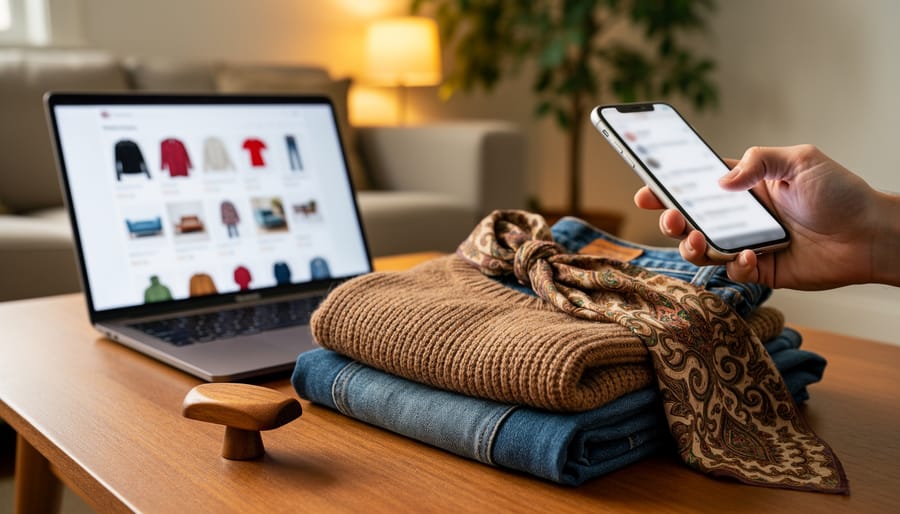
Shopping at an online thrift store is straightforward: search by category and size, scrutinize photos for condition and authenticity, check seller ratings and return policies, then buy with confidence using secure payment methods. The difference from in-person thrifting? You can’t touch the fabric or inspect seams up close, so success depends on asking the right questions, reading measurements carefully, and knowing how to spot red flags in listings.
The digital secondhand marketplace has exploded over the past few years, making it possible to score vintage designer finds, quality furniture, and unique home decor without leaving your couch. But that convenience comes with trade-offs. You’re trusting a stranger’s description, relying on smartphone photos that might hide stains or damage, and navigating return policies that vary wildly from platform to platform. The good news? Once you know what to look for, online thrifting becomes as reliable as your favorite local shop.
Whether you’re hunting for a mid-century dresser (the same furniture thrift tips apply online) or building a sustainable wardrobe on a budget, the process stays the same. Filter aggressively, zoom in on every photo, measure your space or body twice, and always message the seller before committing to a pricey item. This guide walks you through the exact steps to find genuine deals, verify quality before you click “buy,” and avoid the common pitfalls that leave newcomers frustrated with wrinkled packages and mismatched expectations.
What You’ll Need Before You Start
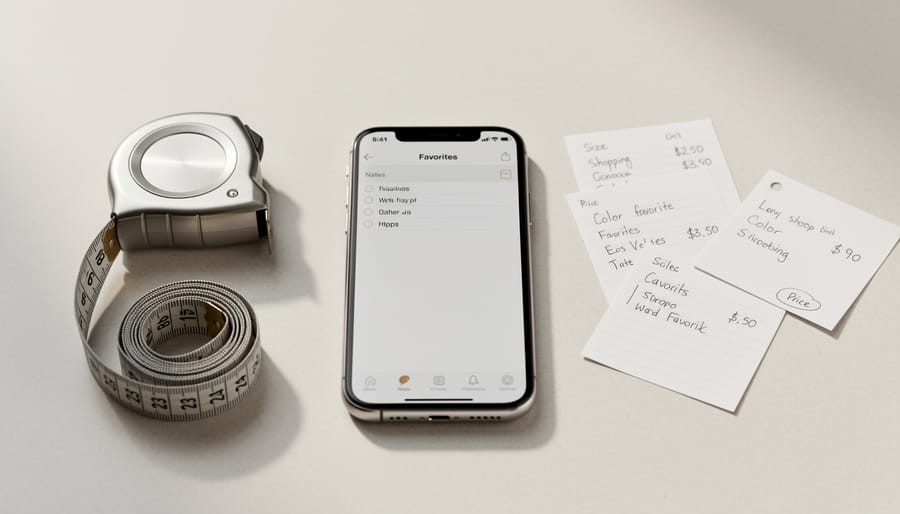
You don’t need much to start shopping online thrift stores, but having a few essentials on hand makes the experience smoother and helps you avoid buyer’s remorse. Think of this as your digital toolkit, half physical items, half smart habits that turn casual browsing into strategic treasure hunting.
- A reliable smartphone, tablet, or laptop with a stable internet connection
- Soft measuring tape for checking clothing and furniture dimensions
- Saved payment method to grab deals quickly before someone else does
- Notes app or spreadsheet for tracking favorite sellers, saved searches, and items you’re watching
- Screenshot capability to save listings and compare options side-by-side
- Organized bookmark folders for different platforms and categories
The measuring tape deserves special mention because it’s your defense against disappointment. I learned this after buying a “vintage armchair” that looked perfect in photos but turned out to be a child-sized accent piece that barely fit my cat. Now I measure my spaces first and keep a running list of key dimensions in my phone, my waist, inseam, shoulder width, shelf heights, and doorway clearances.
Equally important is knowing what you’re actually looking for before you start clicking. Browse with purpose rather than aimlessly scrolling. Maybe you need a specific brand of jeans that fits your body type, or you’re hunting mid-century modern nightstands under 24 inches wide. Having clear criteria helps you recognize a genuine score when you see it and keeps you from buying things just because they’re cheap. Save your searches on platforms that offer alerts, and you’ll get notifications when your perfect item appears, no constant checking required.
Know the Red Flags Before You Click ‘Buy’
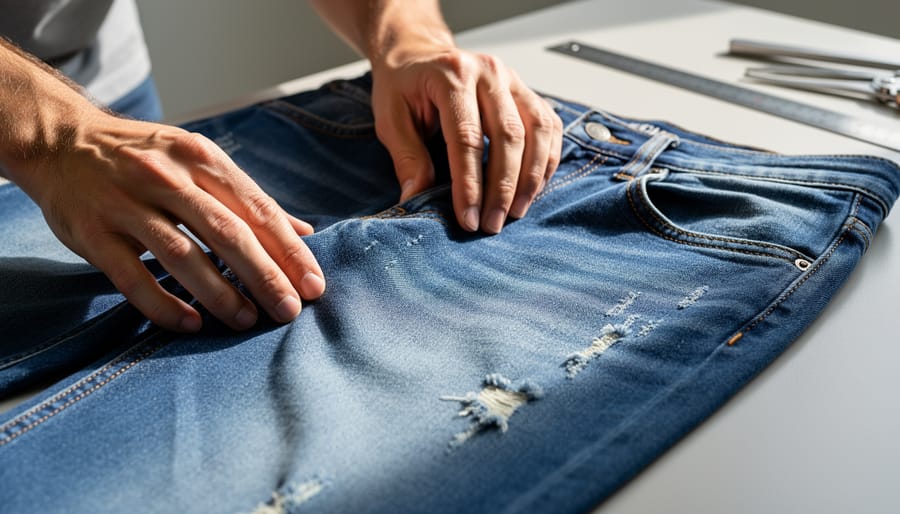
I learned this lesson the hard way when a “vintage leather jacket” arrived smelling like mildew and sporting a ripped lining the seller conveniently photographed from only one flattering angle. That $45 “deal” taught me to shop smarter.
Start by scrutinizing the photos like you’re a crime scene investigator. Are all the shots taken in harsh overhead lighting that washes out stains? Does the seller show the item from multiple angles, or just one strategic pose? Legit sellers photograph flaws up close because they want happy customers, not returns. If you’re squinting at a single dimly-lit image, that’s your first red flag waving.
Check the shop’s return policy before you fall in love with anything. No returns accepted? That’s fine for a $3 mug, but risky for a $60 dress. Some online thrift platforms don’t require sellers to accept returns at all, which means you’re buying as-is. Know this going in.
Pricing can be tricky. A designer handbag listed at 90% off retail screams counterfeit or severe damage. Real thrift deals exist, but they’re rarely jaw-dropping steals on high-end items. Cross-reference similar items on the platform to gauge realistic pricing.
Don’t skip the seller ratings and reviews. Read the negative ones especially. Do buyers complain about misrepresented conditions, slow shipping, or poor communication? Patterns matter more than one cranky review.
Finally, add shipping to your mental tally immediately. A $20 sweater with $18 shipping isn’t a bargain. Some sellers inflate shipping costs to boost profit while keeping the item price attractive. Factor in the total before you get excited.
Your Step-by-Step E-Thrift Shopping Strategy
Start With the Right Search Terms
The difference between finding nothing and uncovering a gem often comes down to how you search. Online thrift stores don’t organize inventory like traditional retail sites, you’re digging through thousands of unique items uploaded by different sellers with varying levels of detail.
Start specific, then broaden. Searching “dress” returns chaos; searching “midi dress linen blue small” gets you closer. Include brand names when you know them (“Madewell denim jacket” versus just “denim jacket”), and mention materials that matter to you, wool, leather, silk, cotton. These descriptors cut through the clutter.
Don’t stop there. Try alternative spellings and vintage terms that sellers might use: “blouse” and “top,” “trousers” and “pants,” “frock” for vintage dresses. Search by decade (“80s blazer,” “90s mom jeans”) since many thrift sellers tag era-specific styles that way.
Use every filter the platform offers. Set your size, preferred colors, and maximum price before you scroll. Saved searches with alerts mean the platform does the hunting for you, notifying you when new matches appear. I’ve scored my best finds this way, pieces I would’ve missed in real-time browsing.
Read Listings Like a Detective
Every photo tells a story if you know how to read it. When you’re scrolling through an online thrift shop, don’t just glance at the main image and move on. Start with the lighting, harsh shadows or extreme brightness can hide stains and damage. Natural, even lighting shows items honestly. Look for multiple angles, especially on clothing: front, back, close-ups of seams and fabric texture. If there’s only one photo or it’s oddly cropped, that’s a warning sign.
Zoom in on close-ups of wear. Sellers who photograph a small tear, a loose button, or pilling aren’t trying to deceive you, they’re being transparent. No close-ups at all? Ask for them. Check hems, zippers, underarms, and cuffs where wear shows first.
The description is just as revealing. Measurements matter more than size tags, especially with vintage pieces. Solid listings include pit-to-pit width, length, and inseam for clothes or dimensions for furniture. Material content tells you about quality and care needs. Condition notes like “gentle wear” or “some fading” are honest; vague descriptions like “gently used” without specifics are red flags.
Provenance adds value. A seller mentioning “estate find” or “original owner since 1985” suggests authenticity. Brand misspellings can signal either genuine mistakes or counterfeits, so cross-reference with official product details when you’re unsure.
Ask Questions Before You Commit
Don’t hesitate to reach out to sellers before you buy, most appreciate genuine interest and will happily provide extra details. I once skipped asking about a “vintage leather jacket” and ended up with stiff, cracked pleather that photos had cleverly disguised. Now I always message when something matters to me.
Ask specific questions that require more than yes/no answers. Instead of “Is this in good condition?” try “Can you describe any wear on the elbows and collar?” or “Could you measure from shoulder seam to cuff for me?” Request additional photos of areas the listing doesn’t show: “Would you mind snapping a close-up of the zipper and any interior labels?”
Keep your tone friendly and appreciative. Start with “Hi! I’m really interested in this piece” before diving into questions. If a seller goes out of their way with detailed responses and extra photos, thank them genuinely, you’re building a connection that might lead to first dibs on future finds or flexibility on pricing.
Timing matters too. Message during business hours and give sellers 24-48 hours to respond before moving on. Good communication now prevents disappointment later.
Calculate the True Cost
Before you hit that checkout button, do the math, seriously. I learned this the hard way when a $12 vintage tee turned into a $28 “bargain” after shipping ate up the savings.
Add every cost: the item price, shipping (which can be shockingly high for heavy furniture or international sellers), sales tax where applicable, and don’t forget potential return shipping if things go wrong. Write it down. Now compare that total to what you’d pay new or at a local thrift store where you can see the item firsthand.
A genuinely good deal should save you at least 30-40% compared to retail or other secondhand options, even after all fees. If the savings shrink to just a few dollars, ask yourself: is the convenience worth the gamble of buying sight-unseen?
Sometimes the answer is yes, a rare collectible or perfect-fit designer piece might justify higher shipping. But if you’re hesitating or doing mental gymnastics to convince yourself it’s worth it, that’s your gut telling you to walk away. There’s always another treasure around the corner, and patience pays off when thrifting online.
Make Your Purchase Strategically
Timing matters more than you’d think when shopping online thrift stores. I’ve learned to browse Sunday evenings when new inventory often hits platforms and sellers are eager to move weekend listings. End-of-season sales are goldmines, shop for winter coats in March or swimsuits in September when sellers want to clear space and you’ll see prices drop by 30-50%.
Set up saved searches and alerts for your specific wants. Most platforms let you create custom notifications for keywords, sizes, or brands. I have alerts for “linen midi dress size 8” and “vintage Pyrex” that ping me the moment something new matches. This beats endlessly scrolling and helps you snag deals before other shoppers notice them.
Don’t be shy about making offers where platforms allow it. Sellers expect negotiation, especially on items listed for weeks. I aim for 15-20% below asking price and include a friendly note explaining why I’m interested. The worst they can say is no, and I’ve scored surprising discounts simply by asking politely.
Before you complete checkout, screenshot everything, the listing photos, full description, price breakdown, and seller’s stated policies. Save these in a dedicated folder on your phone. If something arrives differently than described, you’ll have proof. I learned this after a “like new” bag arrived with a broken zipper and the seller had edited their listing post-purchase.
How to Tell If You Scored a Winner (And What to Do If You Didn’t)
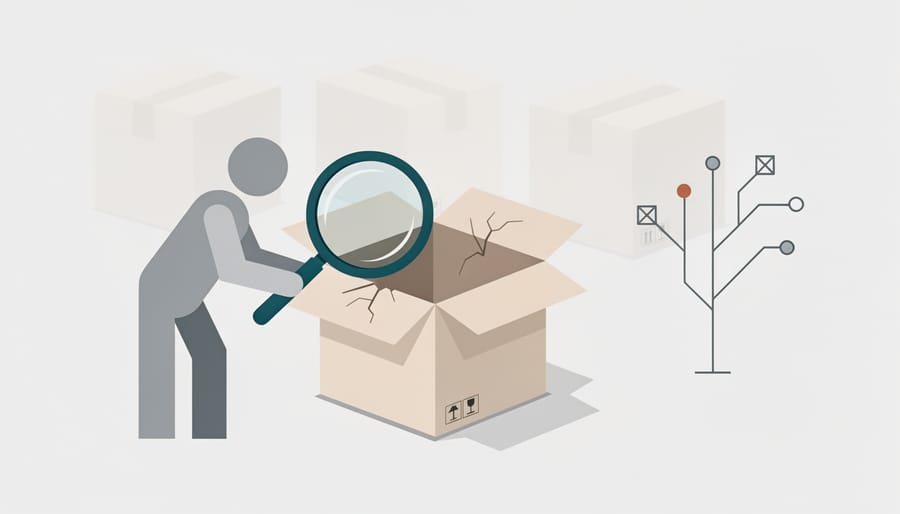
Open your package right away, don’t let it sit for days, and inspect everything with the listing photos pulled up on your phone. Check seams, zippers, and hems on clothing. Test drawers, hinges, and locks on furniture. Look for stains, tears, chips, or scratches that weren’t mentioned in the description.
If something’s off, snap photos of the damage or discrepancy before you do anything else. Most online thrift platforms give you three to seven days to report issues, and clear documentation makes the process smoother. I once received a “like new” sweater with a massive moth hole on the back, photos of the damage next to the listing’s claim got me a full refund within 24 hours.
When everything checks out, leave an honest review. Other thrifters rely on that feedback, and sellers appreciate knowing their descriptions were accurate. If you’re thrilled with your find, share specifics about what made it great.
What about items that just don’t work for you, wrong fit, different color in natural light, or simply not your style once you see it in person? You’ve got options. Relist it on the same platform or another resale app while it’s still in the condition you received it. Turn disappointing pieces into thrifted DIY wall art or cozy crochet projects if you’re crafty. Or donate it locally and call it a learning experience. Not every online thrift purchase will be a home run, but knowing how to handle the misses makes the wins that much sweeter.
Common E-Thrift Shopping Questions
Which online thrift platforms are most reliable?
ThredUp, Poshmark, Depop, and Vinted consistently deliver quality experiences with buyer protection and active communities. Start with one platform, learn its quirks, then expand to others once you’re comfortable with the process.
How do I find my size when shopping vintage online?
Always use measurements, never rely on tagged sizes since vintage sizing runs completely different from modern standards. Keep a measurement card with your bust, waist, hip, inseam, and shoulder width handy, and compare those numbers to the listing’s actual measurements.
Are online thrift stores actually cheaper than in-person?
It depends on what you’re hunting for. Online stores often have better prices for designer items and rare finds since there’s more competition, but shipping costs can eat into your savings on everyday pieces you’d easily find at a local shop for three bucks.
How can I avoid buying counterfeits?
Stick to sellers with established positive reviews, ask for close-ups of tags and logos, and learn the authentication markers for brands you love. When a luxury item seems impossibly cheap with vague photos, trust your gut and keep scrolling.
One question I hear all the time is about building relationships with favorite sellers. It’s simpler than you think: leave thoughtful reviews, respond promptly to messages, and follow sellers whose style matches yours. Many will notify their followers about new listings first or offer bundle deals to repeat customers. I’ve saved hundreds over the years just by being a friendly, reliable buyer with a handful of go-to sellers.
Return policies vary wildly across platforms and individual sellers. Some allow returns within a week, others offer store credit only, and many vintage sellers have final sale policies. Read the fine print before you buy, and factor that risk into whether the price makes sense. If you’re trying a new seller or an expensive piece, prioritize shops with flexible return windows until you’re confident in your ability to judge condition from photos alone.
Like any skill worth having, online thrift shopping gets sharper with every search you run and every listing you learn to decode. Your first few attempts might feel tentative, but soon you’ll recognize a trustworthy seller at a glance and spot the difference between honest wear and hidden damage in seconds. You’ll develop a sixth sense for which searches yield gold and which platforms match your style.
The beauty of e-thrift shopping is that it works on your schedule, from your couch, in your pajamas at midnight if that’s when inspiration strikes. You’re saving money, keeping perfectly good items out of landfills, and discovering pieces with history that no mall can replicate. Whether you’re hunting for sustainable tote ideas or that vintage lamp you’ve been dreaming about, the thrill of the find translates beautifully to the digital realm.
So open a new tab, pick one item you’ve been wanting, and type it into your favorite online thrift platform. Start your treasure hunt today. The perfect secondhand score is waiting somewhere in the pixels, and now you know exactly how to claim it.