
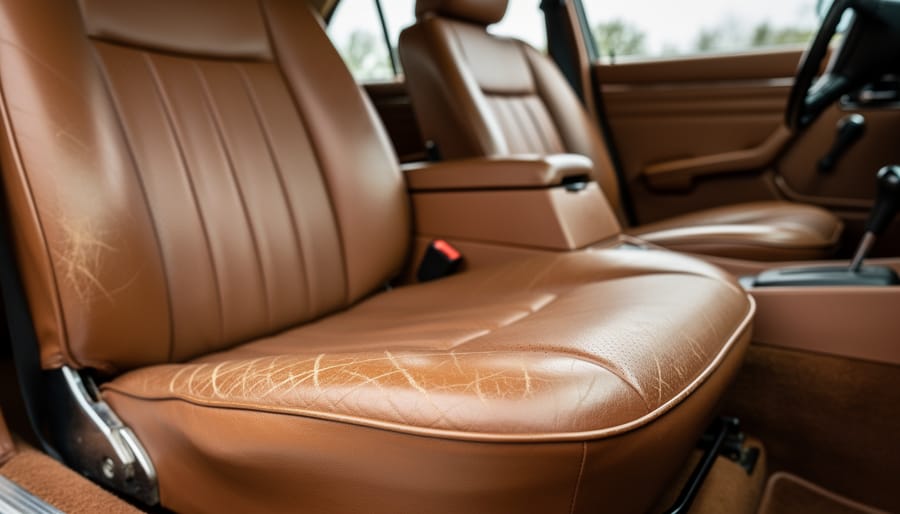
Restoring tired leather seats in your used car takes about two hours and GYEON’s three-step system of cleaner, conditioner, and sealant. The process works because GYEON products are specifically formulated to lift years of grime, rehydrate cracked leather, and lock in protection without the greasy buildup that budget products leave behind.
If you’ve ever slid into a secondhand car and noticed how the driver’s seat feels stiff, discolored, or downright crusty, you’re looking at neglected leather that’s begging for help. Most people assume replacement is the only fix, but here’s the thing: proper restoration costs a fraction of reupholstery and keeps perfectly good materials out of the landfill. That’s the kind of restore vs replace win we love around here.
Used car leather tells a story. Coffee stains on the console, worn patches where the previous owner always sat, maybe some mystery smudges you’d rather not investigate too closely. GYEON’s system tackles all of it by working with the leather’s natural structure rather than just coating over problems. The cleaner strips away old conditioners and dirt. The conditioner penetrates deep to restore suppleness. The sealant creates a breathable barrier that repels future stains and UV damage.
You don’t need professional detailing experience to get showroom results. What you do need is patience, the right products, and a willingness to put in a little elbow grease on a Saturday afternoon. Your wallet and the planet will thank you for choosing restoration over replacement with GYEON leather protection.
Why GYEON Products Work So Well for Secondhand Leather
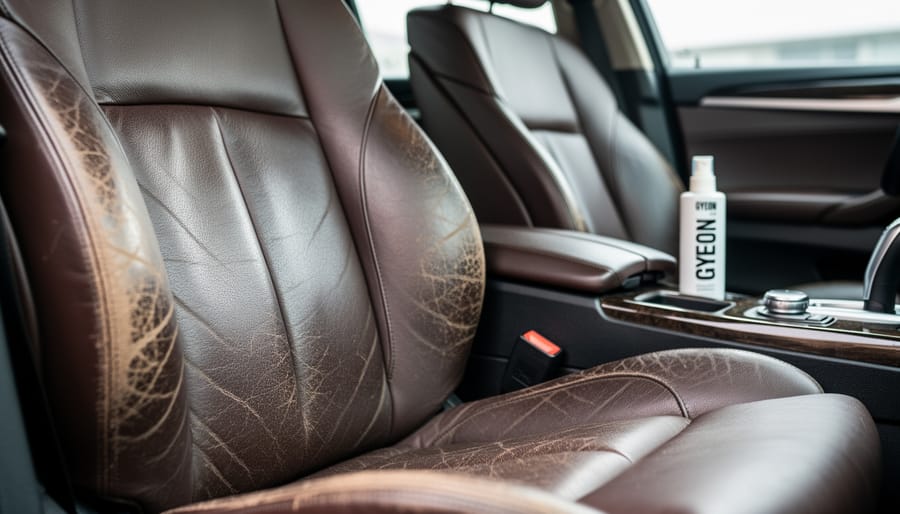
When I picked up my first thrifted car three years ago, the leather seats looked tired, faded patches on the driver’s side, mysterious stains on the back seat, and that slightly sticky feeling that makes you wonder about the previous owner’s snacking habits. I’d restored plenty of secondhand furniture using the same furniture thrifting tips I’d learned over the years, but car leather felt different. A friend recommended GYEON products, and honestly, they changed everything.
GYEON leather care products work brilliantly for used car seats because they’re formulated with secondhand challenges in mind. Unlike generic cleaners that strip away oils and leave leather brittle, GYEON LeatherCleaner lifts accumulated grime and body oils from years of use without compromising the material’s natural flexibility. The pH-balanced formula is gentle enough that you won’t accelerate existing wear patterns, yet strong enough to tackle the ground-in dirt that comes with pre-owned vehicles.
What really sets these products apart is their dual action. GYEON LeatherCoat doesn’t just clean, it rebuilds the protective layer that’s worn away over time, helping secondhand leather resist future staining and UV damage. That’s crucial for used seats that have already lost much of their factory protection. You’re essentially hitting reset on the leather’s defenses.
The eco-friendly angle matters too. Replacing worn car seats costs hundreds or even thousands of dollars, plus it means perfectly salvageable leather ends up in a landfill. A GYEON kit runs about thirty to fifty dollars and can restore seats that look beyond hope, making it both the thrifty choice and the sustainable one.
What You’ll Need: Products and Tools
Getting started with GYEON leather care doesn’t require a garage full of equipment. You’ll need a few specialized products and some basic household items you probably already own. Here’s what to gather before you dive into restoring those secondhand seats.
The core of your restoration kit centers on two GYEON products. GYEON LeatherCleaner (around $15-20 for 500ml) is your first line of defense, formulated to lift dirt, body oils, and grime without stripping the leather’s natural protective layer. It’s pH-balanced specifically for automotive leather, which matters more than you’d think when dealing with used seats. GYEON LeatherCoat (roughly $20-25 for 120ml) comes next, creating a protective barrier that keeps your freshly cleaned leather supple while guarding against future wear and UV damage. You’ll find both at auto detailing shops, online retailers like Amazon, or directly from GYEON’s website. If your used seats are particularly dry or cracked, consider adding GYEON LeatherSet Strong (about $35-40), which includes a more intensive conditioner alongside the cleaner.
Beyond the GYEON products, you’ll need supplies you might have tucked in a closet somewhere:
- Several microfiber cloths (at least 4-6) for applying products and buffing without scratching
- A soft-bristled brush or old toothbrush for working cleaner into seams and textured areas
- Your household vacuum with a brush attachment to remove loose debris first
- A small spray bottle if your cleaner doesn’t come with one
- Painter’s tape or plastic sheeting to protect surrounding fabric or trim
Most households already have these basics, which keeps your total investment modest. Budget around $40-60 for the complete setup if you’re starting from scratch, though the GYEON products will last through multiple treatments. That’s considerably cheaper than reupholstering or replacing tired leather seats, and you’ll have supplies left over for regular maintenance going forward.
Before You Start: Safety and Prep Tips
Before you dive into transforming those thrifted leather seats, a few smart precautions will protect both you and the material you’re working with. Used leather has already weathered years of wear, different climate conditions, and who-knows-what from previous owners, which means it can be more fragile than factory-fresh upholstery.
First, crack open those car doors and let fresh air flow through. GYEON products are safer than many traditional cleaners, but working in a confined space like a car interior still calls for good ventilation. If it’s chilly outside, at least keep the windows down while you work.
This spot-test step matters even more with secondhand leather because you don’t know its history. Previous owners might have applied silicone dressings, used harsh cleaners, or let the material dry out to the point where it reacts unpredictably.
Protect your car’s carpet and trim by tucking towels along the seat edges. Lay down an old sheet if you’re worried about drips. And here’s what to absolutely skip: household cleaners, bleach-based products, excessive water (leather and saturation don’t mix), stiff brushes, and rough scouring pads. Used leather needs gentle persuasion, not aggressive scrubbing. The goal is restoration, not further stress on already-tired material.
Step-by-Step: Cleaning and Restoring Your Used Leather Seats
Preparing the Surface
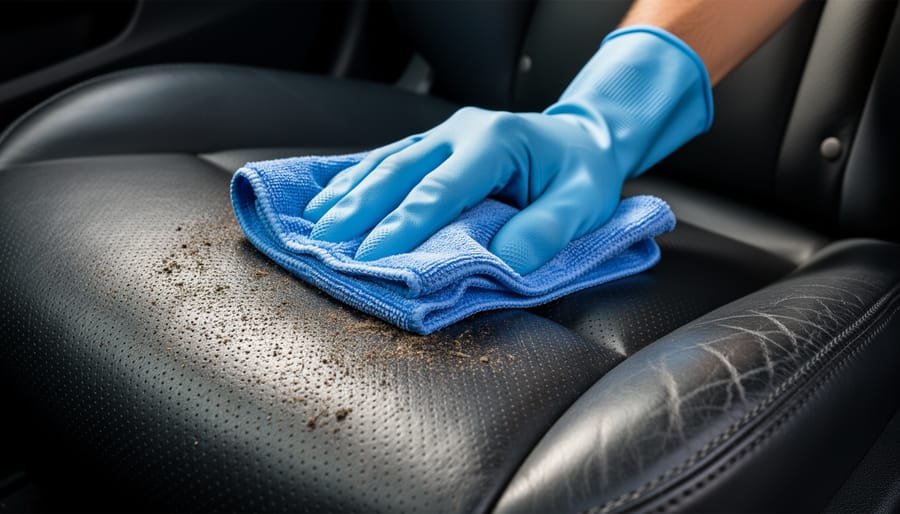
Start with the car parked in a shaded spot or your garage, direct sunlight makes leather hot and can interfere with cleaning. Open all doors for good airflow and to make reaching every crevice easier.
Use your vacuum’s crevice tool to pull out crumbs, dirt, and debris from seams, stitching, and the gaps between seat sections. These areas trap surprising amounts of gunk in used cars. Pay special attention to where the seat bottom meets the backrest, that’s where French fries and pocket change disappear.
After vacuuming, wipe the entire surface with a clean, dry microfiber cloth to remove surface dust. This prevents you from just smearing dirt around when you start cleaning.
Now take a good look at what you’re working with. Note any deep scratches, cracks, or areas where the finish has worn through. Check for sticky spots, mystery stains, or discoloration. Don’t panic if things look rough, that’s exactly why you bought GYEON products. Just knowing what you’re dealing with helps you plan your approach and set realistic expectations for the transformation ahead.
Deep Cleaning with GYEON LeatherCleaner
Start by shaking the GYEON LeatherCleaner bottle well, then spray a light, even mist directly onto a clean microfiber applicator pad, not onto the seat itself. This gives you better control and prevents oversaturation, which can seep into seams and cause problems down the line.
Work the cleaner into the leather using small circular motions, applying gentle pressure. You’ll notice the pad starts picking up grime pretty quickly, that brown or gray residue is all the accumulated oils, dirt, and who-knows-what from the previous owner. It’s oddly satisfying to see how much comes off.
For heavily soiled areas, don’t scrub harder. Instead, apply a second light spray to your pad and work the same spot again with patience. The cleaner needs time to break down embedded dirt, not brute force. If you’re dealing with particularly grimy sections like the driver’s side bolster where people slide in and out constantly, let the product sit for 30 seconds before wiping.
Once a section looks clean, flip to a fresh part of your microfiber cloth and buff away any remaining residue with quick, light strokes. The leather should feel slightly damp but not wet. Move systematically across each seat, left to right, top to bottom, so you don’t miss spots. Replace your microfiber towels as they get dirty; trying to clean with a filthy cloth just spreads the mess around.
Conditioning and Protection
Once your seats are clean and completely dry (give them at least 30 minutes), it’s time to bring back that soft, supple feel and lock in protection. Shake your GYEON LeatherCoat bottle well, then apply a small amount, about the size of a nickel, to a clean, dry microfiber applicator pad. Work it into the leather using small, overlapping circular motions. You’ll notice the product absorbs quickly into thirsty secondhand leather.
For seats that feel particularly dry or show fine cracks, apply a second thin coat after the first has absorbed (usually 10-15 minutes). Don’t overdo it, multiple thin layers beat one heavy application every time. The product should disappear into the leather, not sit on top as a greasy film.
After application, let the seats cure for at least two hours before sitting on them. Overnight is even better if you can swing it. Once cured, lightly buff with a fresh microfiber cloth to reveal a natural, protected finish. Your leather should feel noticeably softer and look richer, with a subtle sheen that water will bead right off of. For severely weathered seats, a third maintenance application after a week can work wonders.
Dealing with Stubborn Stains and Odors
Even after a thorough cleaning, some marks on used leather tell stories you’d rather forget. Coffee rings, mystery ink blotches, and that vague musty smell from the previous owner, these need special attention.
For stubborn stains, apply GYEON LeatherCleaner directly to the spot and let it sit for 30 seconds before gently agitating with a soft brush in circular motions. Patience wins here; multiple light treatments beat one aggressive scrub that might damage the leather’s finish. The same careful approach you’d use to remove stubborn stains from other surfaces applies, gentle persistence trumps brute force.
Persistent odors often hide in the foam beneath, not just the surface. After cleaning, leave windows cracked overnight with baking soda sprinkled on the seats, then vacuum thoroughly before conditioning.
Some character marks, faint discoloration, honest wear patterns, add authenticity to a well-loved interior. If a stain doesn’t budge after three careful attempts, consider embracing it as part of your car’s thrifty story.
How to Tell Your Seats Are Properly Protected
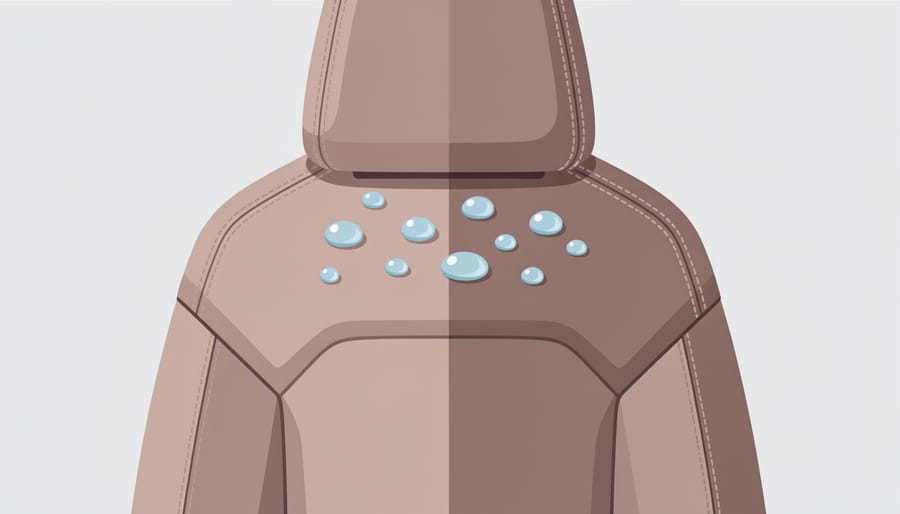
After you’ve completed the GYEON treatment, step back and admire your work. You’ll notice several clear signs that the protection has taken hold. The leather should feel softer and more supple than before, without any sticky or tacky residue. Run your hand across the surface, it should glide smoothly with a subtle, natural sheen rather than looking greasy or artificial.
Check for these indicators of successful restoration:
- Even color tone with reduced fading or discoloration from previous wear
- Smooth texture free of product streaks or patches
- Water beads up and rolls off when you sprinkle a few drops on the surface
- No chemical smell, just clean leather
- Visible reduction in fine scratches and scuff marks
The water beading test is your best friend here. Properly protected leather repels moisture instead of absorbing it immediately. If water soaks in within seconds, the coating hasn’t fully bonded, wait another hour and test again, or consider applying a second thin coat after 24 hours. Developing these thrifty cleaning habits means learning to verify your work rather than guessing, saving you product and time in the long run.
Keeping Your Thrifted Leather Seats Beautiful
Once your used leather seats are restored, keeping them that way takes surprisingly little effort. Think of it like watering a houseplant, a little regular attention beats emergency interventions.
Quick-wipe your seats every week or two with a barely damp microfiber cloth. This removes surface dust and body oils before they build up and dull the finish. Takes maybe two minutes and prevents grime from grinding into the leather grain.
For deeper maintenance, plan to use GYEON LeatherCleaner every three to four months, or whenever the seats start feeling less smooth to the touch. If you drive daily or have kids who inevitably spill things, bump that up to every six to eight weeks. Apply LeatherCoat protection twice a year, spring and fall work well as seasonal reminders.
Keep a dedicated microfiber cloth in your glovebox for immediate spill response. Fresh messes wipe away easily; dried ones become projects.
Avoid letting wet items sit on the seats, and crack a window when you park in summer heat. UV and trapped moisture are leather’s biggest enemies, even after protection. This simple routine means your secondhand seats will stay supple and attractive for years without another full restoration session.
Common Questions About GYEON Leather Care
Will GYEON products work on very old or cracked leather?
Yes, GYEON LeatherCleaner and LeatherCoat are gentle enough for aged leather and can significantly improve its appearance. However, deeply cracked leather won’t magically disappear, the products restore suppleness and protect against further damage, but existing structural cracks will remain as character marks.
How long does GYEON leather protection actually last?
With normal use, you can expect three to four months of protection from a single application of GYEON LeatherCoat. High-traffic seats or frequent sun exposure may require reapplication sooner, while lightly used rear seats can go longer between treatments.
Can I use GYEON products on faux leather or vinyl seats?
GYEON leather products are formulated specifically for genuine leather and may not bond properly with synthetic materials. For faux leather or vinyl, stick with products designed for those surfaces to avoid wasted effort and product.
Is GYEON worth the cost compared to cheaper leather cleaners?
The upfront cost is higher, but GYEON products are highly concentrated and last much longer than drugstore alternatives. One bottle handles multiple cars over a year, and the protection quality means you’re cleaning less often, it’s the thrifty choice in the long run.
What if the leather still looks dull after my first treatment?
Used leather that’s been neglected for years often needs two or three treatment cycles before it fully revives. Give it a week, then repeat the cleaning and conditioning process, each round brings more improvement as you lift years of embedded grime.
Will GYEON remove the “used car smell” from leather seats?
GYEON LeatherCleaner removes odor-causing oils and bacteria embedded in the leather itself, which tackles a major source of stale smells. For complete odor elimination, you’ll also need to address the carpet, headliner, and air vents separately.
These questions pop up constantly in thrifting and used car communities, and they’re all rooted in real concerns about whether investing in quality leather care makes sense for secondhand seats. The short answer is yes, but with realistic expectations. GYEON won’t turn a twenty-year-old seat into showroom condition, but it will make a dramatic difference in how your thrifted ride looks and feels. The key is understanding what these products can and can’t do, they’re restoration tools, not magic erasers for structural damage.
Transforming worn leather seats in a used car might feel like a small project, but the results are genuinely rewarding. With GYEON products and a couple of hours on a weekend, you’ve turned tired, unloved upholstery into something you can be proud of every time you slide behind the wheel. That’s the beauty of restoration over replacement: you’re not just saving hundreds of dollars, you’re keeping perfectly functional materials out of the landfill.
Used doesn’t mean used up. Those seats had life left in them, they just needed someone willing to invest a little care. By choosing to restore rather than rip out and replace, you’ve made a decision that’s both financially smart and genuinely sustainable. You’ve proven that secondhand can look first-rate.
The leather in your car will continue rewarding you for months to come, developing character while staying protected. Every time you clean your seats or notice water beading on the surface, you’ll remember that you did this yourself. You took something thrifted and made it shine. That’s resourcefulness worth celebrating.