
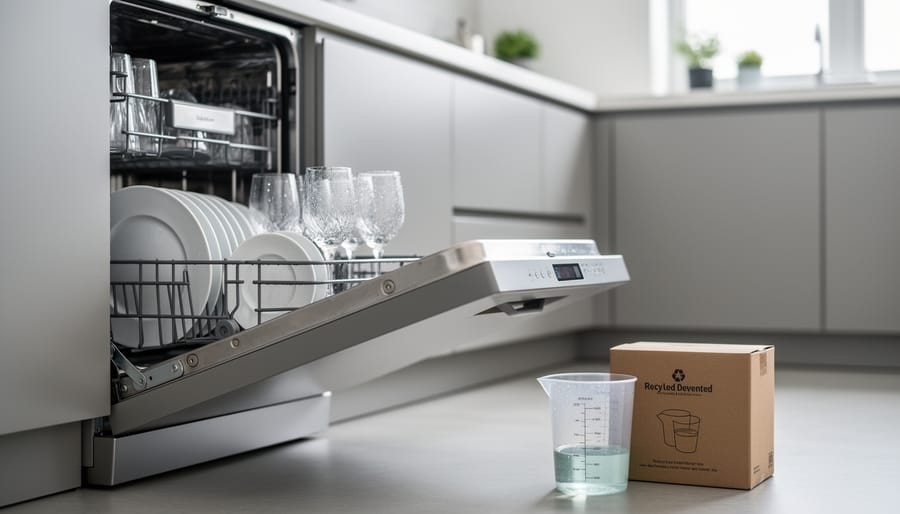
You can cut your dishwasher costs by up to 40% and still get sparkling dishes by using the right amount of detergent, skipping the pre-rinse, and running full loads on eco mode. These aren’t corner-cutting compromises. They’re smarter habits that actually improve results while saving water, energy, and money every single wash cycle.
Most of us were never taught how to use a dishwasher efficiently. We overload pods, blast through water rinsing plates that don’t need it, and run half-empty cycles because we’re out of forks. The cost adds up fast: wasted detergent, higher water bills, worn-out machines, and dishes that still come out cloudy or streaky.
The good news? Small shifts in how you load, dose, and maintain your dishwasher deliver immediate savings without sacrificing cleanliness. You don’t need expensive specialty products or a brand-new machine. You just need to understand what actually works.
In this guide, you’ll find nine practical habits that make the biggest difference, ranked by impact and ease. We’ll cover how much detergent you really need (spoiler: it’s less than the pod companies want you to believe), why eco mode is your secret weapon, and simple DIY alternatives to pricey rinse aids. You’ll also learn how to keep your machine running efficiently with maintenance tricks that take minutes but add years to its life.
Whether you’re trying to stretch your household budget or reduce your environmental footprint, these thrifty dishwasher habits prove you can do both. Let’s get into what actually works. For more on optimizing your dishwasher’s performance, check out https://www.mustanghygiene.co.uk/how-to-use-dishwasher-salt-and-why-it-is-so-important.
How We Chose These Dishwasher Habits
We didn’t just pick these habits randomly, each one earned its spot through a combination of hands-on testing in our own kitchens and deep dives into eco-conscious dishwashing research. Over several months, we experimented with different detergent amounts, loading patterns, and DIY alternatives while tracking our product use and utility bills. The goal was finding strategies that actually work without sacrificing clean dishes or requiring complicated routines.
Every habit we included had to meet these specific criteria:
- Product efficiency, demonstrably reduces detergent, rinse aid, or water usage
- Cost savings, provides measurable financial benefits over time
- Environmental benefits, lowers energy consumption, plastic waste, or chemical runoff
- Ease of implementation, requires minimal effort or investment to adopt
- Real-world effectiveness, delivers consistently clean results in everyday use
We also consulted energy efficiency studies, talked with repair technicians about what actually keeps dishwashers running well, and learned from the eco-conscious community’s collective wisdom. The habits that made the cut are the ones that genuinely help you avoid product waste while making your dishwasher work smarter, not harder. They’re ranked by impact and practicality, so you can start with the biggest game-changers first.
Dishwasher Detergent Types: Know What You’re Using
Before you can master thrifty dishwasher habits, you need to know what you’re putting in that little dispenser. The type of detergent you choose affects both how much you use and how much you spend, so let’s break down your options.
- Powder Detergent
- The most economical option per load, powder lets you control exactly how much you use and doesn’t contain fillers or pre-measured doses. Best for hard water areas since you can adjust the amount based on your needs.
- Liquid Detergent
- Mid-priced and easy to measure, liquid detergent dissolves quickly in any water temperature and won’t clump in humid conditions. Works well for quick or eco cycles where powder might not fully dissolve.
- Pods and Tablets
- Pre-measured convenience comes at the highest cost per load and removes your ability to adjust for lightly soiled dishes. Best reserved for heavily soiled loads where you’d use a full dose anyway.
- Eco-Friendly Concentrates
- Highly concentrated formulas mean a little goes a long way, often matching powder’s cost-effectiveness while using plant-based ingredients. Look for refillable options to cut packaging waste and save even more.
Here’s the thrifty truth: powder and concentrates give you the most control over how much you’re actually using. With pods, you’re locked into whatever the manufacturer decided was “one load”, which is usually way more than necessary for everyday dishes. I switched from pods to powder two years ago and a single box now lasts me four months instead of six weeks. That’s real money staying in your pocket while your dishes come out just as clean.
1. Use Half the Detergent You Think You Need
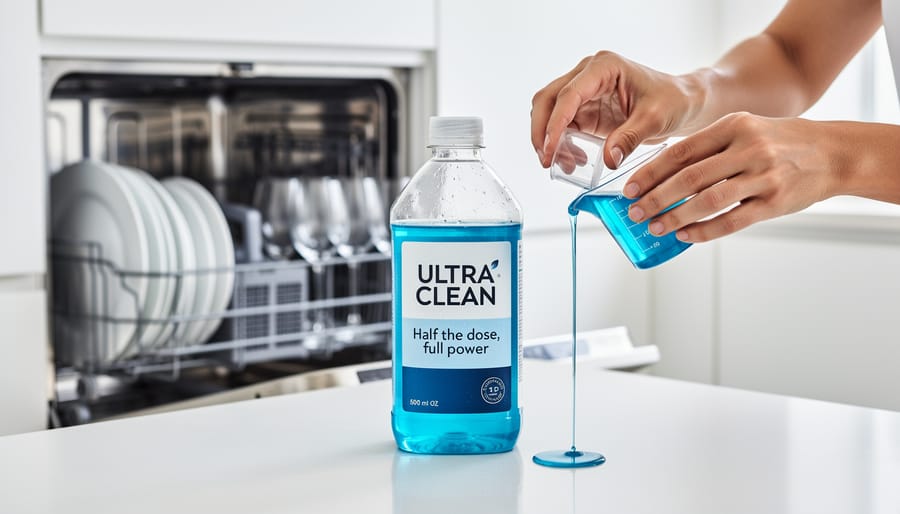
I’ll never forget the day I realized I’d been wasting dishwasher detergent for years. After chatting with a repair technician who came to fix my neighbor’s machine, I learned that most people use two to three times the detergent they actually need. Skeptical but curious, I decided to experiment by cutting my usual pod in half for powder equivalent.
The results? My dishes came out cleaner than ever.
Here’s what’s happening: Dishwasher detergents have become incredibly concentrated over the past decade. Manufacturers formulated these products to work efficiently in modern, water-saving machines that use less water per cycle. When you add too much detergent, it doesn’t rinse away completely, leaving a cloudy film on glasses and plates. That residue you’ve been blaming on hard water? It’s often just excess soap.
Start by using half your normal amount for a week. For powder detergent, that’s about one tablespoon instead of filling the dispenser. If you use pods, consider switching to powder or liquid so you can control the exact amount. Check your dishwasher manual too, most recommend far less detergent than the bottle suggests.
You’ll likely notice your dishes looking shinier, your detergent lasting twice as long, and your grocery budget breathing easier. I now spend about six dollars every three months on dishwasher detergent instead of fifteen dollars monthly. That’s over one hundred fifty dollars saved annually, just by trusting that less really can be more.
2. Skip the Pre-Rinse and Save Water
Here’s the water bill shock that got me to stop pre-rinsing: I calculated I was spending an extra five minutes of running water per load, which added up to roughly 20 gallons wasted before the dishwasher even started. Those food scraps you’re washing down the drain? Your detergent actually needs them.
Modern dishwasher detergents contain enzymes specifically designed to break down food particles. When you pre-rinse everything spotless, these enzymes have nothing to latch onto, so they end up working against the dishes themselves rather than grime. That’s why sometimes pre-rinsed loads come out with a filmy residue, the detergent is essentially searching for something to clean and settling for etching your glassware instead.
The smart approach is scraping, not rinsing. Use a spatula or old dishcloth to remove large chunks of food into your compost or trash, we’re talking bones, whole noodles, and congealed sauce globs. Everything else, from dried-on oatmeal to tomato sauce smears, can go straight into the dishwasher. If you’re worried about particularly stubborn spots, a quick wipe with a dry paper towel works better than running water. Your dishes will come out cleaner, you’ll use less water than a DIY vinegar rinse requires for hard water spots, and your detergent will perform exactly as formulated.
3. Load Strategically for Maximum Efficiency
The way you load your dishwasher determines whether you’ll need to run it twice, and nothing wastes more product, water, and energy than a second wash for dishes that didn’t come clean the first time.
I learned this the hard way after repeatedly finding crusty forks and cloudy glasses. Turns out, I’d been treating my dishwasher like a game of Tetris, cramming everything in wherever it fit. Once I started following a logical loading sequence, I cut my rewash rate to nearly zero.
- Bottom rack first: Place plates and bowls facing the center, angling them downward so water hits the dirty surfaces. Avoid overlapping, each piece needs direct spray access.
- Top rack second: Stand glasses and cups upside down between tines (not over them), positioning larger items along the sides where they won’t block spray arms.
- Utensil basket strategy: Mix spoons, forks, and knives rather than grouping types together. This prevents nesting and ensures water reaches every surface. Place sharp knives point-down for safety.
- Check spacing: Leave gaps between items, if two pieces touch, water can’t clean where they meet. Spin the spray arms manually to confirm nothing blocks their rotation.
The biggest game-changer? Placing your dirtiest items facing the center and downward. Water sprays up from the bottom and rains down from the top, so positioning matters enormously.
One habit I’ve adopted: before closing the door, I peek inside and ask myself if water could realistically reach every dirty spot. If something looks blocked or nested, I adjust. This 10-second check has saved me from countless half-clean loads and the product waste that comes with running them again.
4. DIY Rinse Aid from Pantry Staples
Making your own rinse aid is ridiculously simple and costs about 10 cents per bottle compared to $5-8 for commercial versions. I switched to DIY rinse aid two years ago after reading the ingredients on my store-bought bottle and realizing white vinegar does the exact same job.
Here’s the recipe: fill your rinse aid dispenser with plain white distilled vinegar. That’s it. The acidity prevents water spots and helps dishes dry faster by reducing surface tension, which is precisely what expensive rinse aids do.
For those who want a slightly enhanced version, mix 1 cup white vinegar with 1 cup water and 10-15 drops of lemon essential oil. The diluted version works perfectly fine for most water types and makes the vinegar last even longer. Store any extra in a glass jar under your sink.
One gallon of vinegar costs around $3 and lasts my household nearly a year. Compare that to buying rinse aid every two months. The savings add up to roughly $30 annually, plus you’re eliminating plastic bottles from the waste stream.
The only exception: if you have extremely hard water, you might need to stick with commercial rinse aid or address the water hardness issue separately.
5. Run Full Loads Only (But Not Overloaded)
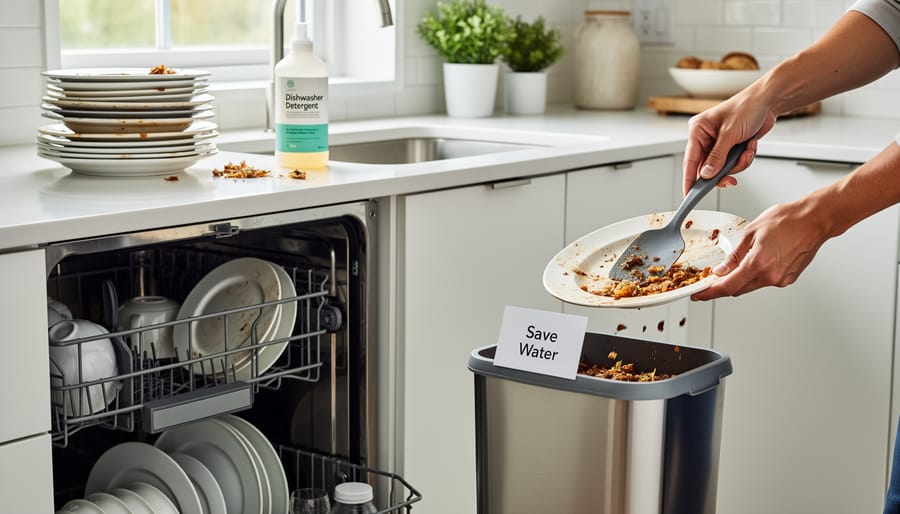
Here’s the thing about full loads: I used to run my dishwasher every night, sometimes with just a few plates and mugs rattling around inside. Then I calculated how much I was spending per load on detergent, energy, and water. The math changed my habits fast.
Waiting for a full load means you’re maximizing the value of every drop of detergent and every kilowatt-hour. You’re spreading the cost of one wash cycle across twenty place settings instead of seven. But there’s a catch: overstuffing defeats the entire purpose.
When dishes touch or block the spray arms, water can’t reach everything. Those trapped food particles become hard water stains and baked-on gunk, forcing you to rewash. That’s double the product, double the water, double the waste.
My sweet spot? Load until you’ve filled about 80% of the available space. Plates should stand upright with gaps between them, bowls nest at an angle, and glasses claim their spots on the top rack without crowding. If you need to play Tetris or force anything in, pull back.
Keep a small tub under your sink for rinsing dishes throughout the day. It takes up minimal space and makes waiting for full loads practical without dealing with dried food. This approach mirrors the cleaning for pennies philosophy: thoughtful timing saves more than rushing through tasks.
6. Choose the Right Cycle for the Job
I spent years running my dishwasher on the heaviest cycle for everything, assuming “more powerful” meant “cleaner.” Then my electric bill shocked me into reality. Most of your loads don’t need that firepower, and choosing the right cycle is one of the easiest ways to cut product, water, and energy waste without sacrificing results.
For everyday dishes with light food residue (breakfast plates, lunch containers, lightly used glasses), the eco or light cycle does the job perfectly. These cycles use lower temperatures and less water, which means you’re stretching your detergent further since there’s less volume to dissolve it in. The longer run time on eco cycles actually cleans more efficiently through extended soaking action rather than brute force heat.
Save your heavy or intensive cycles for truly grimy situations: roasting pans with baked-on cheese, plates from a spaghetti dinner, or anything that’s been sitting longer than it should. Running heavy cycles on lightly soiled dishes is like using a sledgehammer to crack a walnut, it wastes resources and wears out your machine faster.
Think of it like choosing the right tool: just as you wouldn’t store properly cleaned boots by tossing them in a heap, you wouldn’t blast delicate wine glasses on a pot-scrubbing cycle. Match the cycle to the mess, and you’ll use 20-30% less energy per load while your detergent lasts weeks longer.
7. Monthly Maintenance Cleaning
A neglected dishwasher works harder and cleans worse, meaning you’ll end up using extra detergent trying to compensate for poor performance. I learned this the hard way when my dishes started coming out spotty despite doubling my detergent dose. Turns out, my filter was clogged with gunk.
Setting aside 15 minutes once a month keeps your dishwasher running at peak efficiency, which means every drop of detergent works as intended. Here’s my simple routine:
- Remove and rinse the filter under hot water, using an old toothbrush to scrub away trapped food particles and grease
- Wipe down the door seals and edges with a damp cloth to remove buildup that can harbor bacteria and prevent proper sealing
- Place a dishwasher-safe cup filled with white vinegar on the top rack and run a hot, empty cycle to dissolve mineral deposits and soap scum
- Check the spray arms for clogs by removing them and poking a toothpick through any blocked holes
If your dishwasher has stubborn buildup, sprinkle a cup of baking soda on the bottom and run a short hot cycle after the vinegar treatment. The combination tackles odors and leaves everything fresh.
This monthly reset costs less than a dollar in vinegar and prevents the gradual decline that makes people assume they need stronger or more expensive detergents. A clean machine means your thrifty habits actually deliver the sparkling results you’re after.
8. Soften Hard Water Naturally
Hard water is a sneaky budget drainer. Those white spots on glasses aren’t just annoying, they’re a sign you’re fighting an uphill battle that forces you to use extra detergent without getting better results.
I learned this the hard way after moving to an area with mineral-heavy water. Suddenly my usual half-dose trick stopped working, and cloudy film appeared on everything. Instead of buying expensive commercial softeners, I discovered a simple fix: add one to two tablespoons of washing soda (sodium carbonate) directly to your dishwasher along with your regular detergent.
Washing soda costs around three dollars for a box that lasts months. It works by binding to calcium and magnesium minerals, preventing them from interfering with your detergent. You’ll immediately notice clearer dishes and can often reduce your detergent amount back to that efficient half-dose.
For extremely hard water, running a monthly empty cycle with two cups of white vinegar helps remove mineral buildup from spray arms and heating elements. This keeps your machine working efficiently so every drop of detergent actually reaches your dishes instead of fighting scale deposits.
9. Store Detergent Properly to Prevent Waste
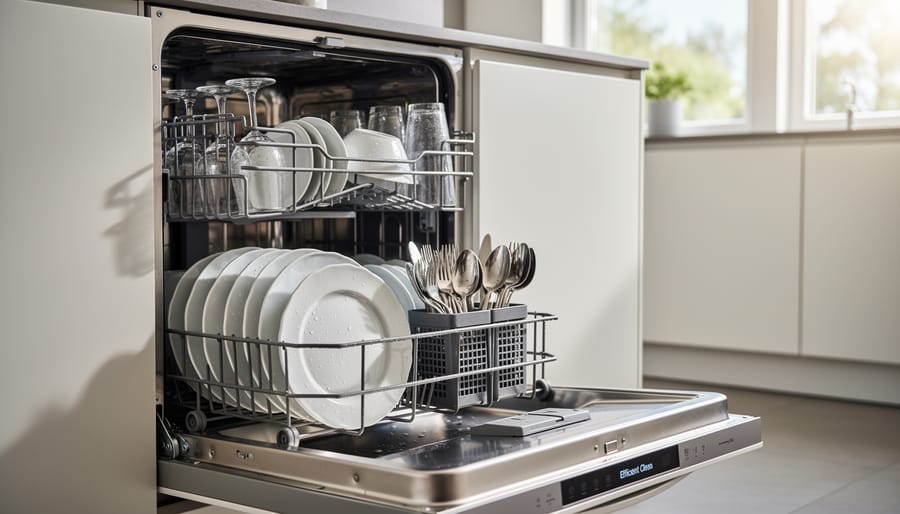
I learned this lesson the hard way after finding my dishwasher powder had turned into one solid brick. Moisture is detergent’s worst enemy, causing clumping that makes you use twice as much trying to break off chunks, or pods that turn gummy and don’t dissolve properly.
Transfer powder detergent to an airtight container immediately after opening. Those flimsy cardboard boxes aren’t sealed well enough for humid kitchens. I use a recycled glass jar with a rubber seal, stored in my pantry rather than under the sink where humidity fluctuates.
For pods, keep them in their original container but seal the bag tightly and store them away from moisture. If your container doesn’t seal well, pop the whole thing into a large ziplock bag.
Don’t buy more than you’ll use within three months. That bulk discount isn’t actually thrifty if half your detergent degrades before you can use it. Fresh detergent works better at lower doses, which means the smaller package often provides more washes than degraded bulk product.
Check your stash every few weeks. Clumpy powder or sticky pods signal it’s time to toss them before they waste more.
Common Dishwasher Questions Answered
Over the years, I’ve fielded countless questions from friends and readers about cutting dishwasher costs without sacrificing clean dishes. Here are the answers to the most common ones.
How much detergent should I actually use per load?
Start with half the amount recommended on the package, which usually means filling the detergent cup only halfway or using half a pod. Modern detergents are highly concentrated, and most people use two to three times what they need.
Can I really make my own dishwasher detergent?
Yes, simple recipes using washing soda, borax, and citric acid work well for moderately hard water. However, homemade versions require more experimentation and may not perform as consistently as commercial products in very hard water conditions.
Why are my glasses coming out cloudy?
Cloudiness usually results from hard water mineral deposits or detergent film buildup. Run an empty cycle with two cups of white vinegar to remove buildup, then reduce your detergent amount and ensure you’re using rinse aid.
How much money can these habits actually save?
By cutting detergent use in half, skipping pre-rinse, and using DIY rinse aid, most households save $75 to $150 annually on dishwashing products and water costs. The savings add up quickly when you consider reduced energy use from running full loads and eco cycles.
The beauty of these thrifty habits is that they build on each other. Once you master one technique, the next becomes easier to implement, and your savings grow while your environmental footprint shrinks.
What These Habits Mean for Your Wallet and the Planet
When you add up all these thrifty dishwasher habits, the numbers tell a compelling story. By cutting detergent use in half, skipping pre-rinses, and running efficient loads, you could save $75 to $150 annually on dishwashing products and water costs. That might not sound life-changing at first, but it’s money that stays in your pocket while you’re doing something you’d do anyway.
The environmental math is equally impressive. Using less detergent means fewer plastic bottles and pods entering landfills. A typical household goes through 8-12 detergent containers yearly, so halving your usage directly cuts that waste. Factor in the water saved from skipping pre-rinses (2,500+ gallons per year for an average household) and the energy from running fuller, more efficient loads, and your kitchen becomes a surprisingly powerful spot for sustainable living.
You don’t need to implement everything overnight. Start with two or three habits that feel easiest, maybe cutting your detergent dose and skipping the pre-rinse. Once those become second nature, layer in proper loading or DIY rinse aid. Each small shift compounds over months and years. Your dishwasher runs 200-300 times annually, so even tiny improvements per cycle create meaningful change. That’s the beauty of thrifty habits: they work quietly in the background, saving resources and money while you get on with life.