
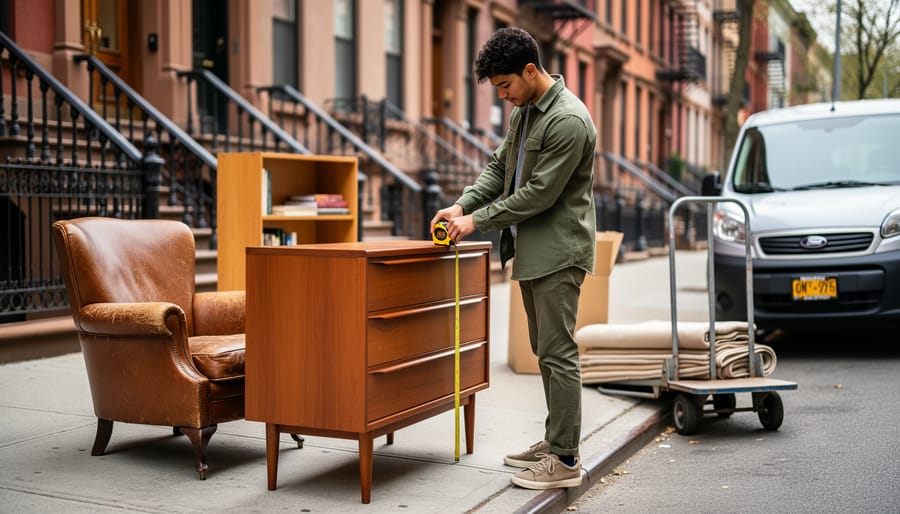
Start your furniture thrifting journey by hitting the Salvation Army and Housing Works locations scattered across Manhattan and Brooklyn, where mid-century dressers and solid wood dining tables regularly appear for under $100. Download the Curbed NY app and set alerts for “free stuff” posts in your neighborhood—New Yorkers leave perfectly good couches, bookshelves, and chairs on sidewalks during the first week of each month when leases turn over.
Map out thrift clusters in specific neighborhoods to maximize your time. The East Village hosts multiple consignment shops within walking distance, while Williamsburg offers a concentration of vintage stores along Bedford Avenue. Bring measurements, a tape measure, and photos of your space on your phone—NYC apartments demand precision, and you won’t want to haul a beautiful armchair up four flights only to discover it blocks your bathroom door.
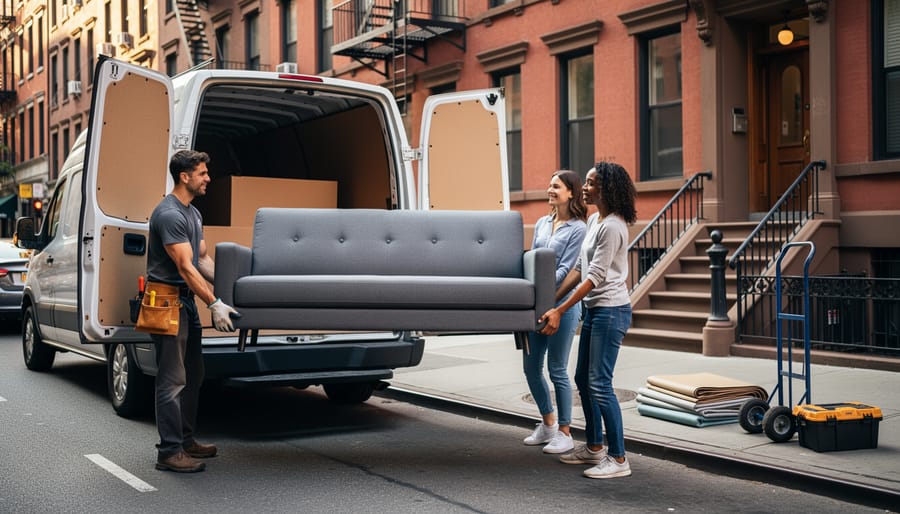
Solve the transportation challenge before you fall in love with a piece. Befriend someone with a car, keep Zipcar and Revel accounts active, or save the numbers of affordable man-with-a-van services that charge $50-75 for quick crosstown hauls. Many thrift stores offer delivery for an additional fee, though this can double your total cost.
Time your visits strategically. Wednesday and Thursday mornings bring fresh inventory after weekend donations get processed, while Sunday afternoons offer the best selection before the week picks over inventory. Building your dream NYC space with secondhand finds takes patience, but the thrill of scoring a $40 leather chair that would cost $800 new never gets old.
Why NYC Is a Furniture Thrifter’s Paradise (And Nightmare)
New York City is genuinely a thrifter’s dream and challenge rolled into one chaotic, exciting package. The thing is, people here move constantly. Like, all the time. Between lease changes, roommate shuffles, and folks relocating for work, there’s a never-ending flow of furniture hitting the market. Add in the fact that 39 percent are studios or one-bedrooms, and you’ve got millions of people downsizing on repeat. That mid-century dresser? Someone’s tossing it because their new place has a built-in closet the size of a shoebox.
I’ll never forget stumbling upon a pristine leather armchair on the sidewalk in the West Village during my second week of serious thrifting. It was one of those moments where you do an actual double-take and wonder if you’re being pranked. Wealthy neighborhoods are gold mines because residents regularly refresh their spaces with zero attachment to perfectly good pieces.
But here’s the nightmare part: you’re not the only one who knows this. Competition is fierce. I’ve watched people literally sprint toward a curbside find, and I’ve lost count of Facebook Marketplace listings that disappeared within minutes of posting. Prices can be surprisingly inflated too, especially at certain thrift stores that know their location attracts shoppers with cash to spend.
Then there’s the logistical circus. Getting a couch up four flights of a pre-war walkup? Planning your route around street cleaning schedules? Trying to fit a dining table in an Uber? These are real problems that’ll test your commitment and creativity. I once recruited three strangers from a coffee shop to help carry a bookshelf six blocks. We’re still friends.
The learning curve is steep, but once you crack the code on timing, locations, and transportation hacks, the payoff is incredible.
The Best Thrift Stores for Furniture in NYC
Manhattan’s Must-Visit Spots
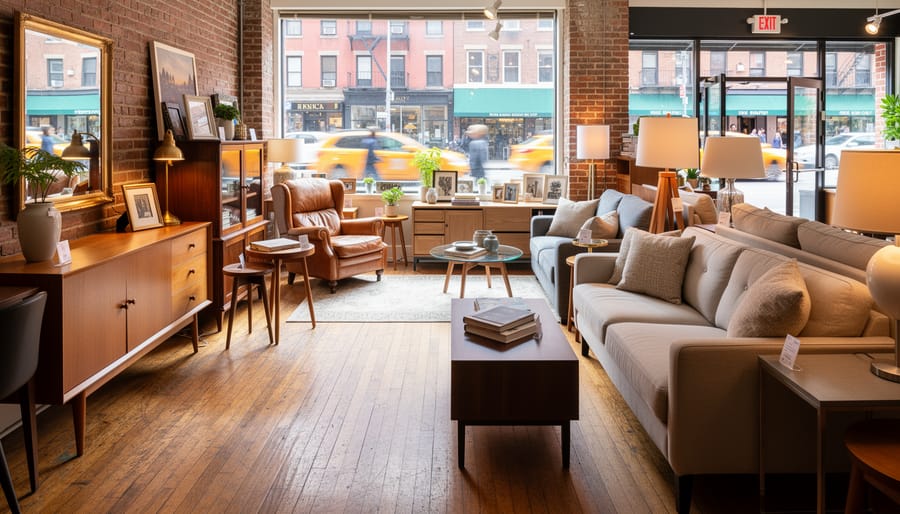
Manhattan is where thrifting magic happens, and trust me, you’ll want to map out your favorites here! Start with Housing Works—these gorgeous stores are literal treasure troves with a heart. The locations on Fulton Street and East 23rd Street are particularly stunning, featuring curated vintage pieces alongside contemporary finds. Every purchase supports their mission to fight HIV/AIDS and homelessness, which makes scoring that perfect mid-century dresser feel even better.
Don’t skip the Goodwill flagship on West 79th Street. This isn’t your typical Goodwill—think spacious aisles, quality control, and surprisingly chic furniture pieces. I once found an art deco vanity there for under $100 that still makes my friends jealous.
The Upper East Side offers hidden gems like consignment shops where wealthy residents offload barely-used designer furniture. Pop into smaller vintage boutiques along Second and Third Avenues—you’ll pay slightly more than traditional thrift stores, but the quality is incredible.
Greenwich Village brings bohemian charm to your furniture hunt. The winding streets hide quirky antique shops and vintage stores where you can negotiate prices. The West Village particularly shines for unique statement pieces with character and history.
Pro tip: Visit Manhattan thrift stores on weekdays when crowds thin out and staff have more time to chat about incoming inventory. They’ll often give you the inside scoop on delivery days, helping you snag the best pieces before anyone else even knows they exist.
Brooklyn’s Thrifting Goldmines
Brooklyn has quietly become one of NYC’s best-kept secrets for furniture thrifting, and trust me, you’ll want to explore every corner of these neighborhoods. The creative energy here means constant furniture turnover as artists, designers, and young professionals move in and out, leaving behind incredible pieces at wallet-friendly prices.
Williamsburg is where vintage meets trendy. Hit up the secondhand shops along Bedford Avenue and Grand Street, where you’ll discover mid-century modern pieces that Brooklyn creatives are constantly cycling through. I once scored a gorgeous teak credenza for $150 that just needed a quick polish. The neighborhood’s rapid resident turnover means fresh inventory appears almost daily, so visiting weekly pays off.
Bushwick brings the raw, industrial vibe you’d expect from an artist enclave. The thrift stores here tend to stock edgier, more eclectic furniture pieces perfect for DIY projects. You’ll find metal shelving units, vintage workbenches, and quirky chairs that just need some creativity to shine. The prices here often run lower than Williamsburg, making it ideal for budget-conscious hunters willing to put in some elbow grease.
Park Slope offers a completely different treasure trove. This family-friendly neighborhood means quality furniture from households upgrading as kids grow. Think solid wood dining tables, barely-used bookshelves, and comfortable sofas. The Community Thrift Store on Ninth Street is a local favorite, with proceeds supporting neighborhood programs. Weekend mornings are prime time here, as new donations get processed and hit the floor quickly.
Queens, Bronx, and Beyond
Don’t sleep on the outer boroughs! While Manhattanites crowd into the same handful of shops, you can score incredible deals in Queens and the Bronx with way less competition. I stumbled upon one of my favorite coffee tables in Astoria for just $30, and the shop owner even helped me tie it to my Lyft’s roof rack (with the driver’s permission, of course).
Queens is a thrifting paradise waiting to be explored. Astoria and Long Island City have several hidden gem shops along their main drags where prices tend to run 30-40% lower than comparable Manhattan stores. The Salvation Army on Northern Boulevard is massive and restocks frequently, while smaller vintage shops in Sunnyside offer carefully curated pieces without the premium price tags. Take the N or W train and make an afternoon of it—you’ll find gorgeous mid-century pieces that would cost triple in Williamsburg.
The Bronx is even more underrated. The Goodwill near Pelham Bay Park gets donations from nearby Westchester County, which means higher-quality furniture at thrift store prices. I’ve found solid wood dressers, barely-used bookshelves, and even designer lamps here. Plus, parking is actually possible if you’re renting a van for larger hauls.
Pro tip: these outer borough shops are perfect for first-time thrifters feeling intimidated by the competitive Manhattan scene. You’ll have time to browse, ask questions, and really examine pieces without someone breathing down your neck ready to snatch your find.
Curb Shopping and Stoop Finds: NYC’s Free Furniture Scene
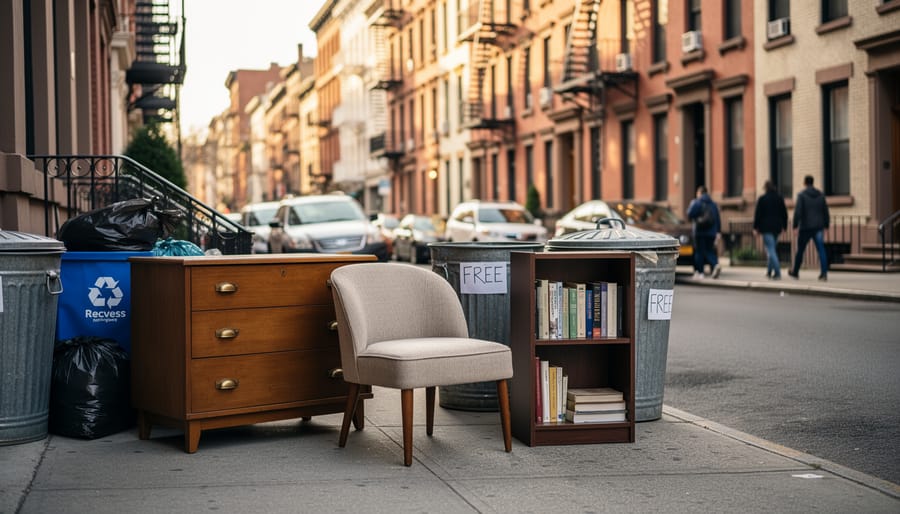
There’s something magical about walking down a New York street and spotting a beautiful mid-century dresser with a “FREE” sign taped to it. I’ll never forget the day I found a perfectly good velvet armchair in the West Village—it just needed a quick steam clean and it became the crown jewel of my living room. This is curb shopping, and it’s one of NYC’s best-kept secrets for furniture hunters.
The art of curb shopping is all about timing and location. Wealthy neighborhoods like the Upper East Side, Park Slope, and Brooklyn Heights are goldmines, especially during the first of the month when leases turn over and people move out. You’ll also hit the jackpot in May and June when college students vacate their apartments near NYU, Columbia, and other universities. Saturday and Sunday mornings are prime time, but remember that bulk trash can only be set out between 6 PM and midnight the night before collection, so evening strolls can yield fresh finds before the early birds arrive.
Now, let’s talk about the elephant in the room: bedbugs. These unwelcome critters have a reputation for latching onto used furniture, so you need to inspect carefully before bringing anything home. Here’s what to watch for:
- Dark spots or stains on fabric, especially in seams and crevices
- Musty or unusual odors that could indicate mold or pest issues
- Wobbly legs, cracked wood, or structural instability
- Tiny rust-colored spots, shed skins, or actual bugs hiding in joints and folds
Stick with hard, non-upholstered pieces when you’re starting out. A solid wood table or metal shelving unit is much safer than a sofa. If you do take upholstered items, inspect every inch with a flashlight and consider leaving the piece in your building’s basement or on a covered porch for a week while you monitor it.
Curb shopping etiquette matters too. If someone’s clearly in the middle of moving things to the curb, ask before grabbing. When something has a “free” sign, it’s fair game. And if you can’t take the whole piece, don’t dismantle it and leave a mess—other treasure hunters are counting on you.
My friend Sarah scored an antique writing desk in Cobble Hill that appraised for over eight hundred dollars. Another pal found matching nightstands in Chelsea that just needed new drawer pulls. These stories aren’t rare—they’re the everyday magic of NYC curb shopping. Just stay vigilant, trust your instincts, and happy hunting!
Online Thrifting: Facebook Marketplace, Craigslist, and Buy Nothing Groups
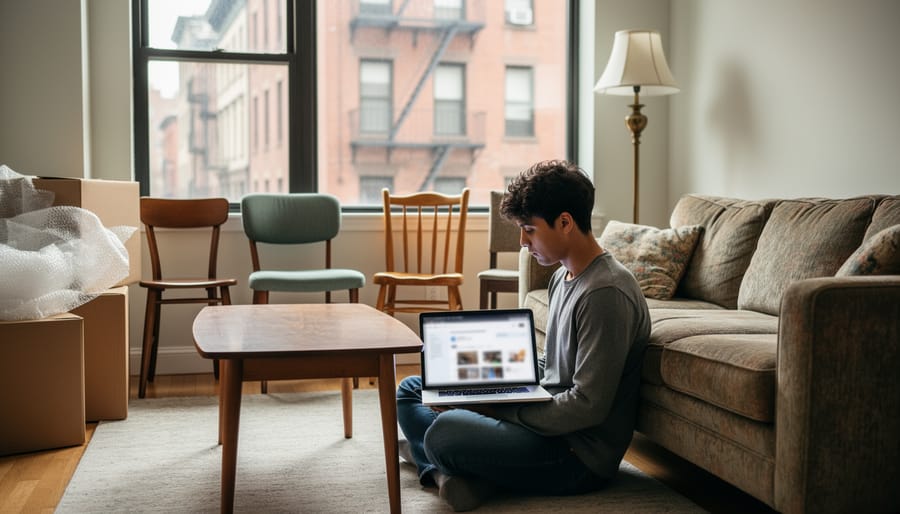
In NYC’s lightning-fast online secondhand market, you’ve got to move quickly and stay sharp. I once spotted a gorgeous mid-century credenza on Facebook Marketplace at 7 AM, messaged immediately, and still ended up third in line. That’s just how it goes here, but don’t let that discourage you! With the right strategies, you can absolutely score amazing finds.
Facebook Marketplace has become the go-to platform for furniture hunting in the city. Set up notifications for your search terms like “dresser Brooklyn” or “vintage couch Manhattan” and check multiple times daily, especially early morning and evening when people post after work. The key is responding within minutes with a clear, friendly message: “Hi! Very interested and can pick up today. Is this still available?” Speed and flexibility are everything.
Craigslist still has gems, particularly in the “free” section. I’ve found that Sunday evenings are prime time as people clean out apartments before Monday trash pickup. Search by neighborhood rather than the whole city to find pieces you can actually reach without renting a van.
Here’s my favorite insider tip: Buy Nothing groups are criminally underrated. These hyper-local Facebook groups operate on gift economy principles, meaning everything is truly free. Join groups for neighborhoods you can easily access. The catch? You’re not competing on price but on your story. When requesting an item, explain why you’d love it and how you’ll use it. I once got a beautiful bookshelf simply by mentioning I was furnishing my first apartment and loved reading. People genuinely want their furniture to go to good homes.
For negotiations, be respectful but honest about your budget. Many sellers are just happy to avoid hauling stuff to the curb. Offering to pick up immediately often seals the deal better than haggling over ten dollars.
Safety first: always meet in public areas when possible, bring a friend for pickups, and trust your instincts. If something feels off, walk away. Exchange cash only after inspecting the item, and never wire money or pay deposits for furniture sight unseen. Take photos of the item and seller’s contact info before leaving.
The NYC online thrifting game requires persistence, but those early morning notification checks really do pay off with incredible finds.
Getting Your Finds Home: The NYC Logistics Challenge
So you’ve scored the perfect mid-century credenza or a gorgeous velvet armchair—amazing! Now comes the real NYC adventure: getting it home without a car. I’ll be honest, I once carried a vintage dining chair seventeen blocks on the subway during rush hour (never again), so let me save you from my mistakes.
The good news? You’ve got options, and they don’t have to drain your wallet. Understanding your choices makes all the difference between a smooth score and a logistical nightmare.
| Transport Method | Average Cost | Best For | Convenience Rating |
|---|---|---|---|
| TaskRabbit/Handy | $30-80 | Medium to large items | High |
| Van rental (Zipcar/U-Haul) | $50-100 | Multiple pieces | Medium |
| Store delivery | $40-150 | Large furniture | High |
| Subway/walking | $2.90 | Small, lightweight items | Low |
| Cart rental | $20-40 | Neighborhood pickups | Medium |
For smaller pieces, TaskRabbit is your best friend. I’ve used haulers who show up with dollies and moving blankets for around forty bucks—totally worth it for a dresser or side table. Book someone with lots of furniture-moving reviews and clear photos showing their vehicle.
Renting a cargo van through Zipcar works great if you’re hitting multiple spots in one day. Split the cost with a thrifting buddy and suddenly that hundred-dollar rental feels like a steal. Just remember to measure everything first—walking back empty-handed after paying for a van is heartbreaking.
Many thrift stores offer delivery services, though prices vary wildly. Housing Works charges reasonable rates, while some smaller shops partner with local delivery services. Always ask before you fall in love with something massive.
For the truly adventurous, collapsible furniture carts from hardware stores cost about thirty dollars and handle surprisingly heavy loads. I’ve seen people wheel entire bookcases down sidewalks like pros. And here’s a secret: if it’s small enough, those IKEA blue bags are indestructible and subway-friendly.
The key is factoring transport costs into your budget from the start. That twenty-dollar lamp isn’t such a bargain if delivery costs sixty bucks.
Neighborhood-Specific Strategies: Where the Rich Discard Their Treasures
Here’s where things get really interesting: the wealthy neighborhoods of NYC are absolute goldmines for furniture treasure hunters. I’ve found some of my best pieces—a mid-century credenza, a barely-used West Elm sectional—simply by knowing where to look and when to strike.
The Upper East Side is legendary for a reason. When wealthy residents redecorate or downsize, they often donate stunning pieces to local thrift shops or leave them curbside. Hit up Housing Works and Goodwill locations in this area, especially between April and October when moving season peaks. I once scored a pristine leather armchair on 82nd Street that would’ve cost me two months’ rent new.
Tribeca and SoHo follow similar patterns. The turnover here is remarkable—young professionals move frequently, and they’re not hauling furniture across the country. Check the curbs on the last week of each month when leases typically end. Early morning walks on trash day (usually Tuesday or Wednesday) often reveal designer coffee tables and accent chairs that just need a quick wipe-down.
Brooklyn Heights and Park Slope deserve your attention too. These family-friendly neighborhoods see constant upgrades as kids grow and tastes evolve. Build relationships with shop owners at local consignment stores—they’ll often text you when something special arrives before it hits the floor.
Pro tip: Follow neighborhood Facebook groups and get friendly with doormen in luxury buildings. I know someone who gets first dibs on building basement “free” piles simply because she brought the super coffee once. Timing matters, but relationships matter more. Show up consistently, be polite, and watch the quality pieces come your way.
There’s truly nothing quite like the thrill of uncovering a one-of-a-kind piece in the bustling treasure troves of New York City. Every vintage chair, midcentury dresser, and quirky side table you discover tells a story while starting a new chapter in your home. The beauty of furniture thrifting in NYC isn’t just about the hunt—it’s about making choices that align with your values and your wallet.
By choosing secondhand, you’re keeping perfectly good furniture out of landfills and giving new life to pieces that deserve another chance. You’re also saving serious cash that you can spend on other adventures in this incredible city. Plus, there’s something genuinely satisfying about telling guests that your stunning coffee table cost a fraction of retail and has way more character than anything fresh off a showroom floor.
Ready to start your own thrifting journey? Grab a reusable tote, download those neighborhood apps, and hit the streets with an open mind and a measuring tape. Remember, the perfect piece might be waiting on a Brooklyn stoop, tucked in a Lower East Side shop, or listed online right now. The adventure is as rewarding as the find itself.
So what are you waiting for? Your next furniture treasure is out there, and NYC has endless possibilities. Embrace the thrifting lifestyle, make your space uniquely yours, and check back here for more guides to help you navigate the amazing world of secondhand finds. Happy hunting!